Galicia, How I Love You

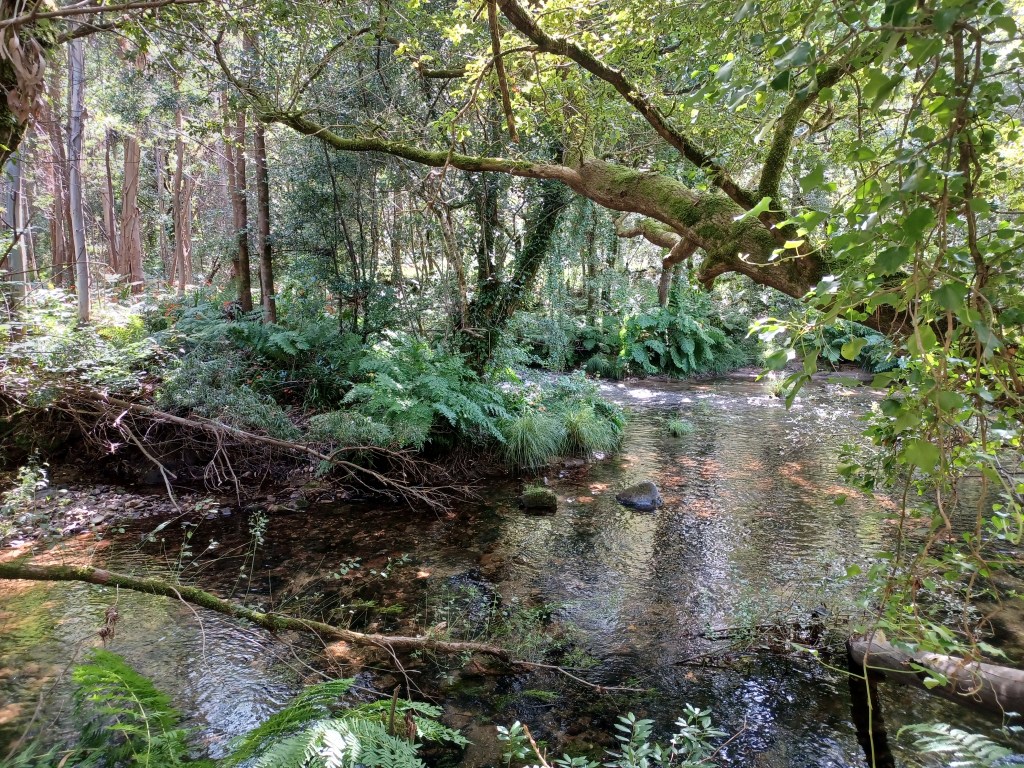
It is impossible to run out of beautiful things to see in Galicia. I have been to so many places around the world, and I have never seen any so incredible in all of my life. It is not one part of one city, it is not one place. It is Galicia. Here she is lush, and dense, and green. So. Green. There is a surreal sensation being in this place that you cannot know until you have lived it. A sense of timelessness. Hundreds and hundreds of years of people loving this same place.
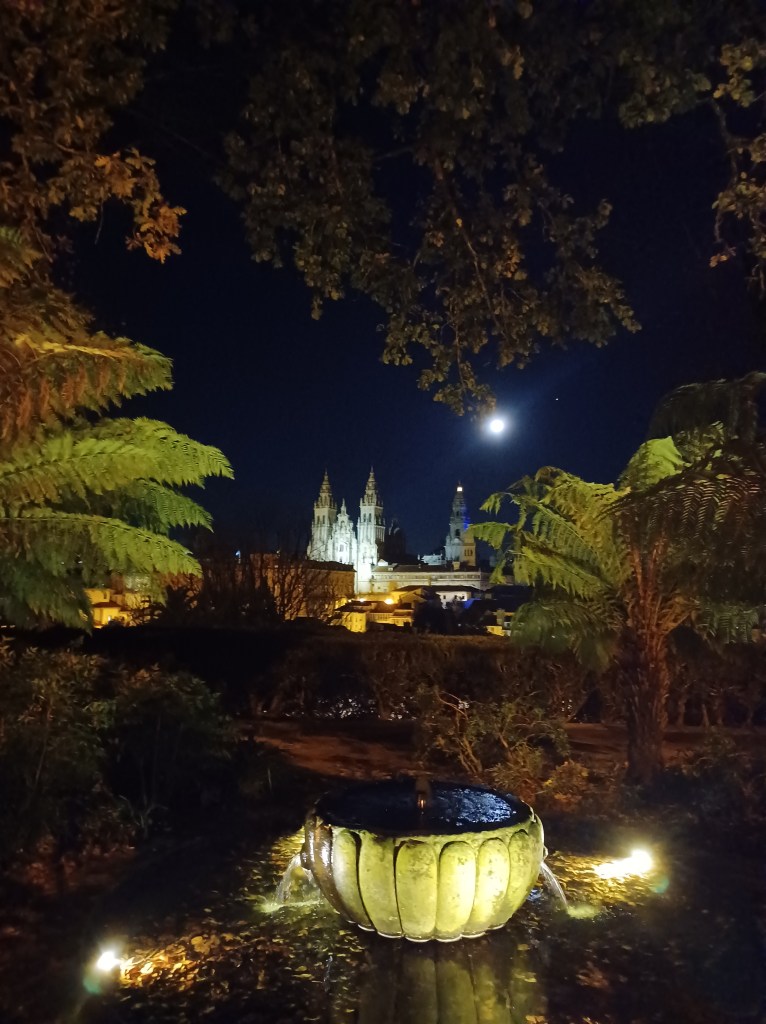
A moonlight view of the Cathedral de Santiago de Compostela from the lighted fountain in el Parque Aladmeda

For over 1200 years, Pilgrims have been making the Camino to Santiago de Compostela. In summer, the Praza de Obradoiro is filled with the awed faces of travelers seeing the cathedral for the first time.

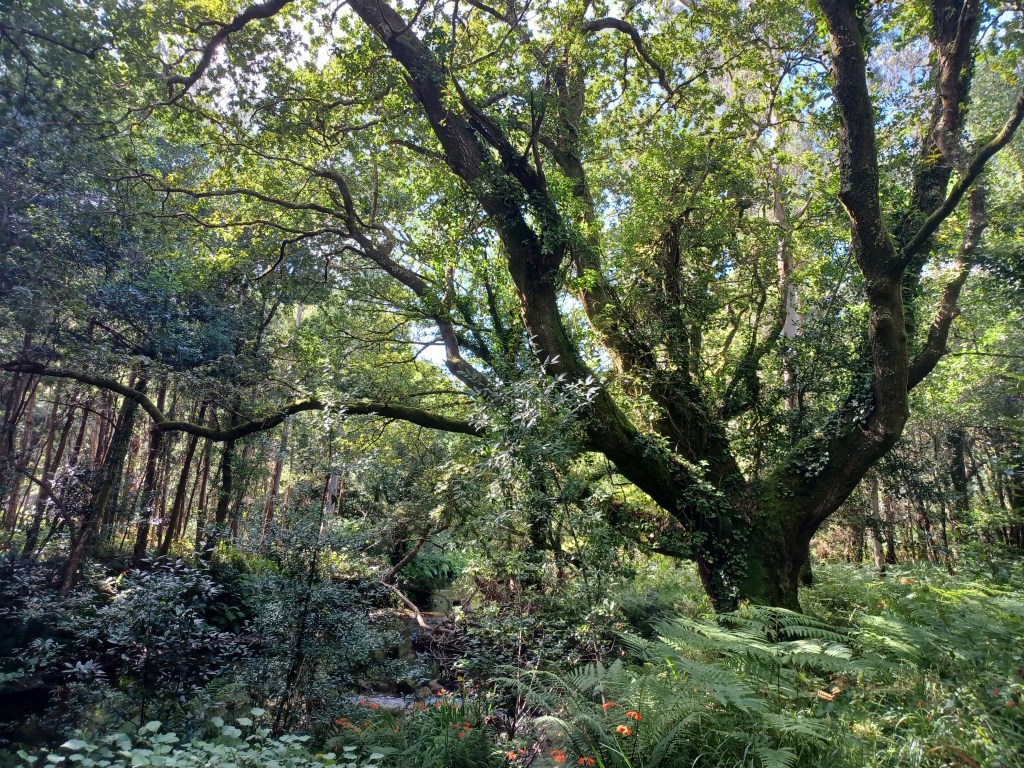
This is a land where the fairy tales are real, where the magic never left, and where las meigas still walk barefoot in the streams and waterfalls. This is the place you imagined as a child. The moon smiles down on your nights like the Chesire Cat in Wonderland. Mornings you awake with clouds as your pillow, the fog settled around sleepy mountain pueblos keeping them safe and unseen through the darkest hours of the night. The oldest, tallest trees in the forest are covered in soft mosses. They guard the clouds until mid morning. and let them go slowly in rivulets of steam. A morning prayer to the sun like little dancing forest spirits. By afternoon, the mica sparkles like diamonds in the stones and the sand. Leaving the beach at the end of a long afternoon your body shimmers like fairy fire in the late afternoon sun. Springheads in the mountains become waterfalls as rivers flow to the ocean.
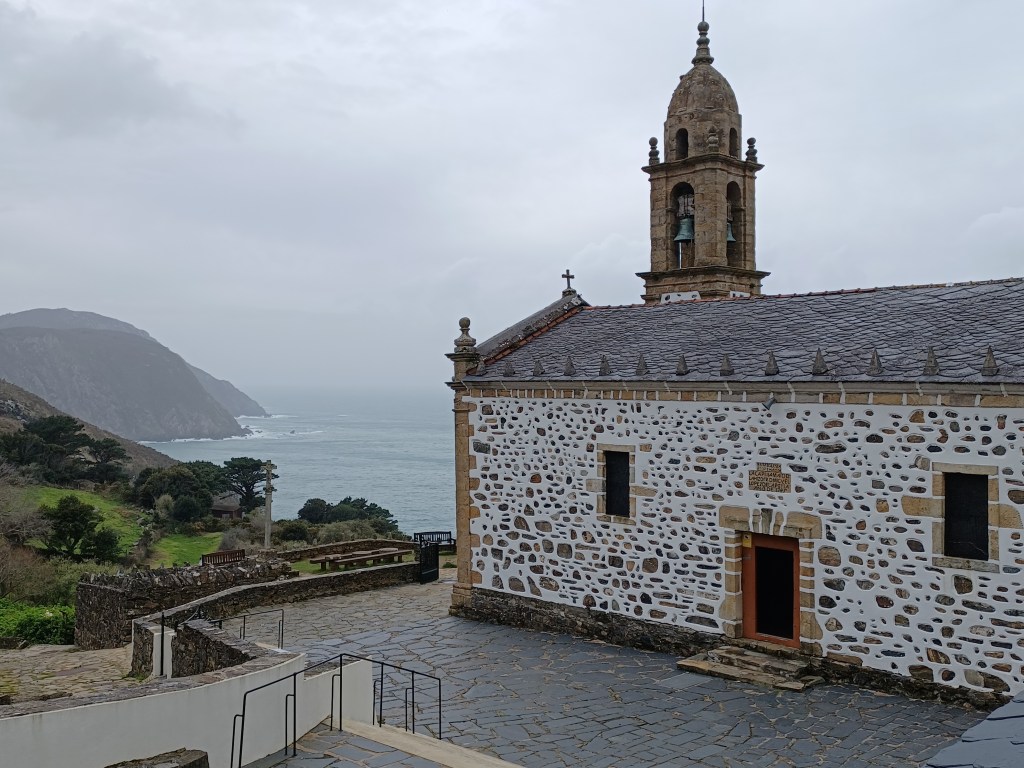
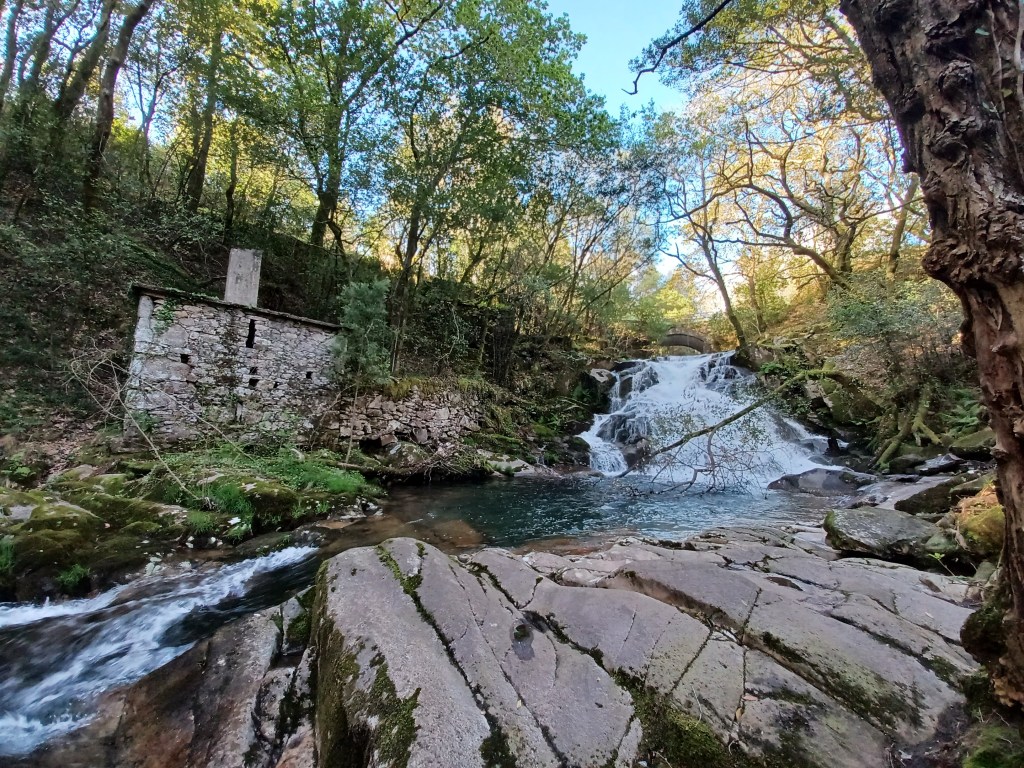
Living here comes at a price.

Build what you wish, but Galicia retakes what is hers and makes it green again in time. Galicia does not belong to men. She cannot.
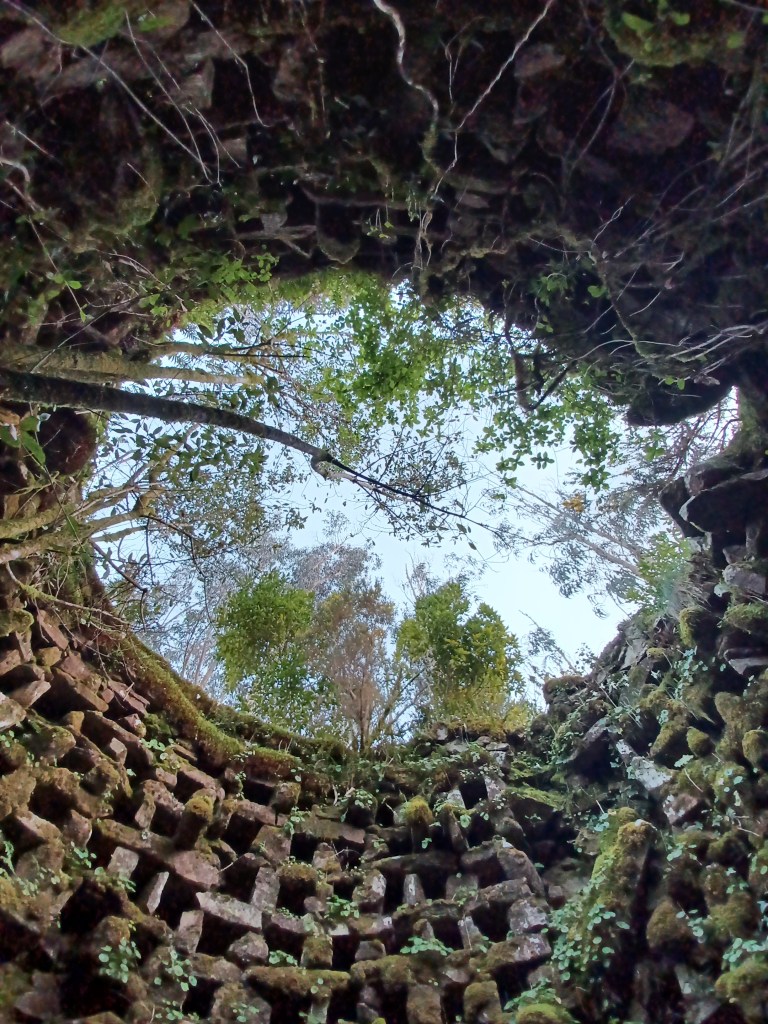
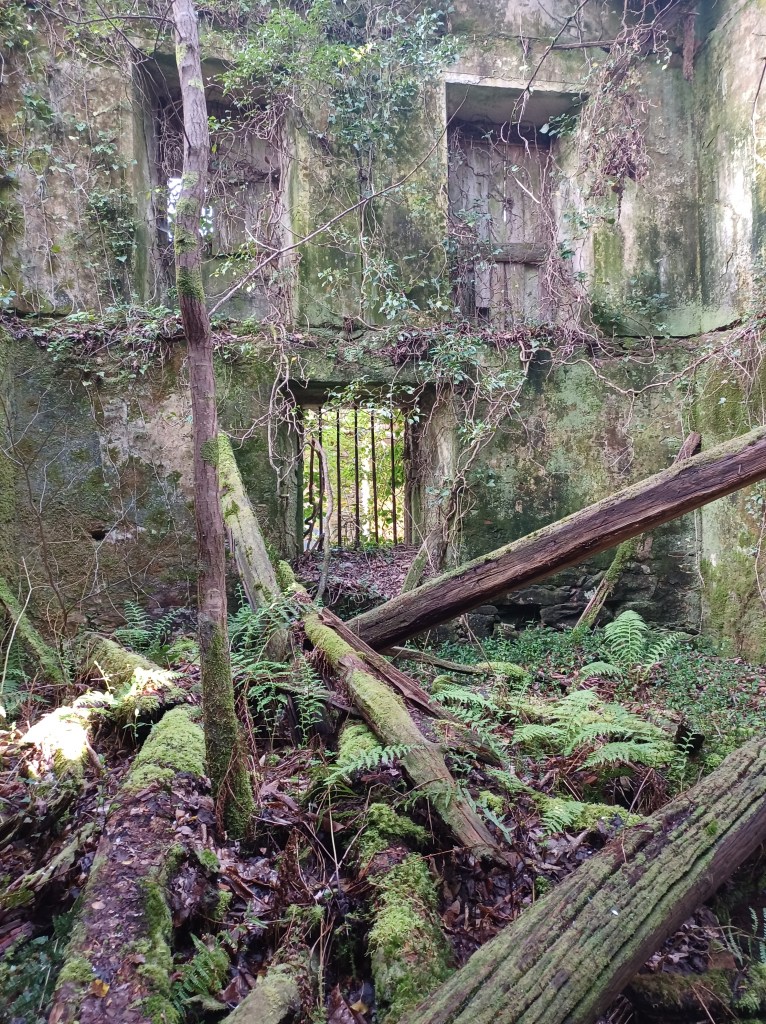
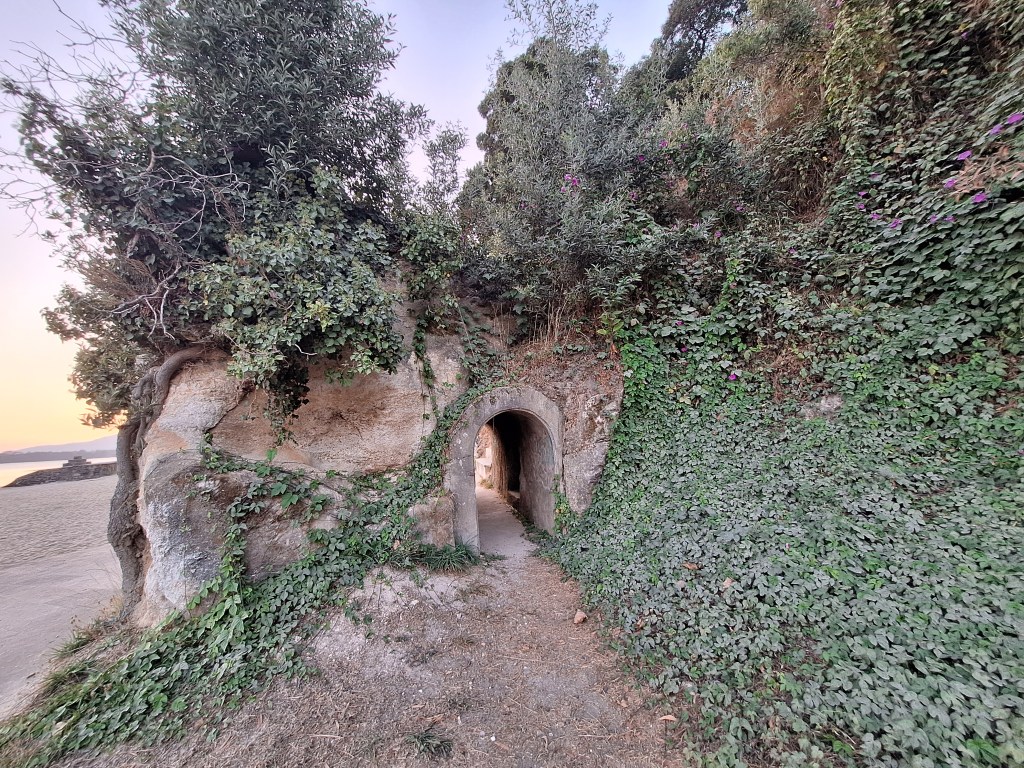
Palomera covered in vines.
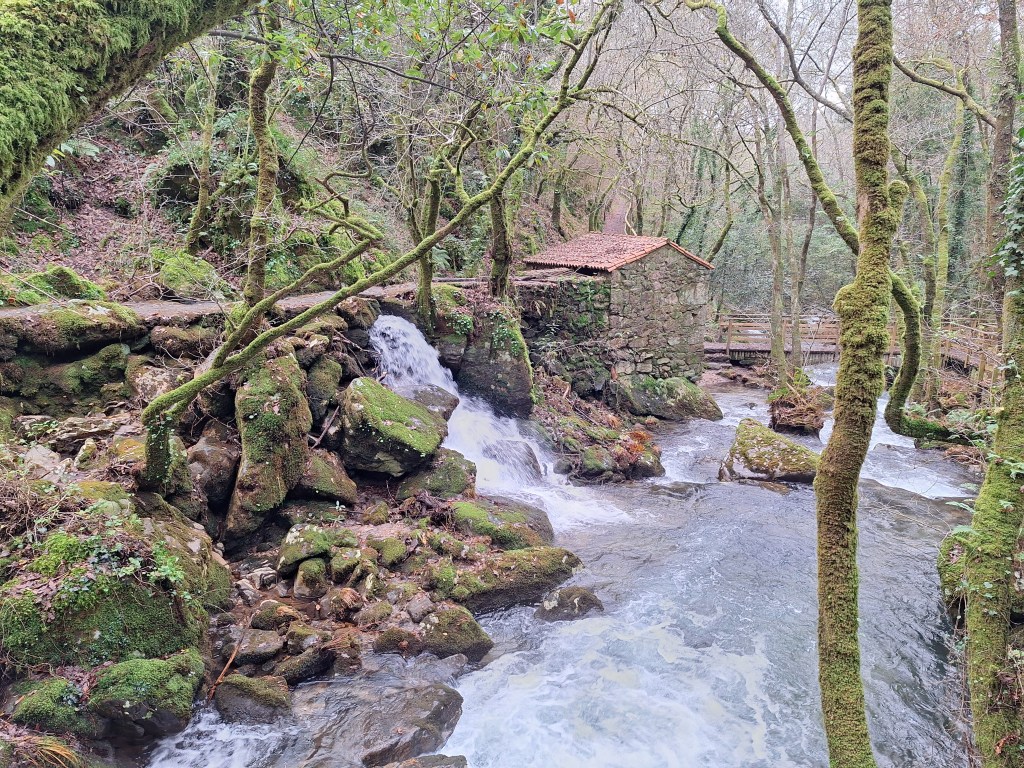
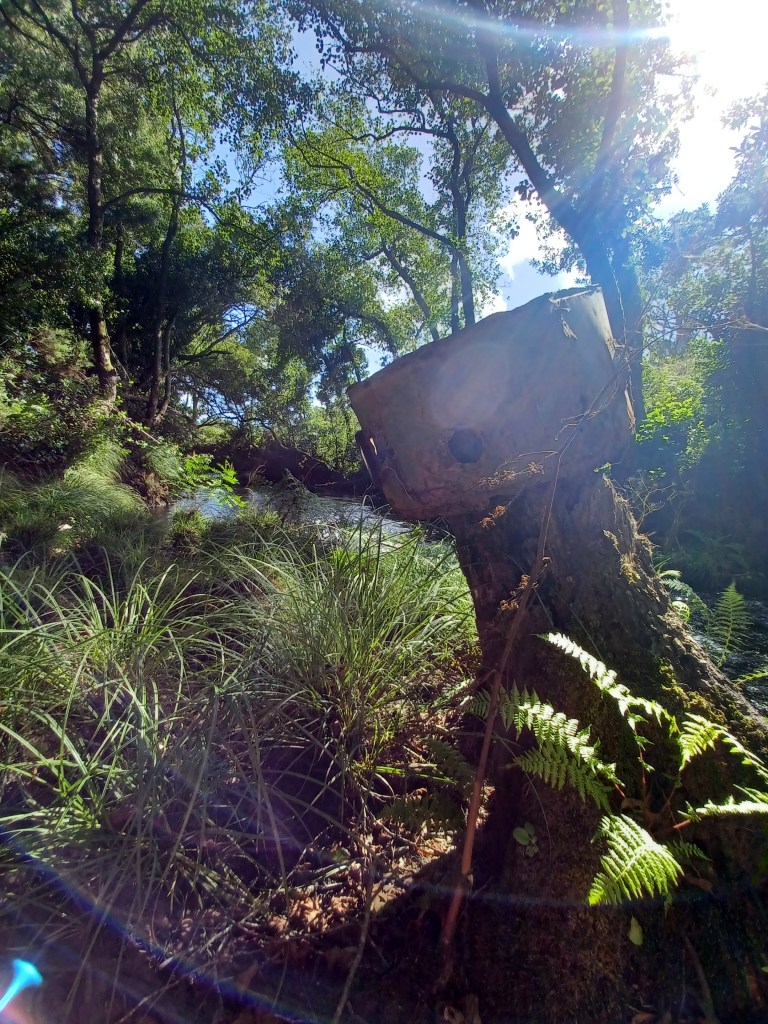
Old paper factory reclaimed by moss and trees.
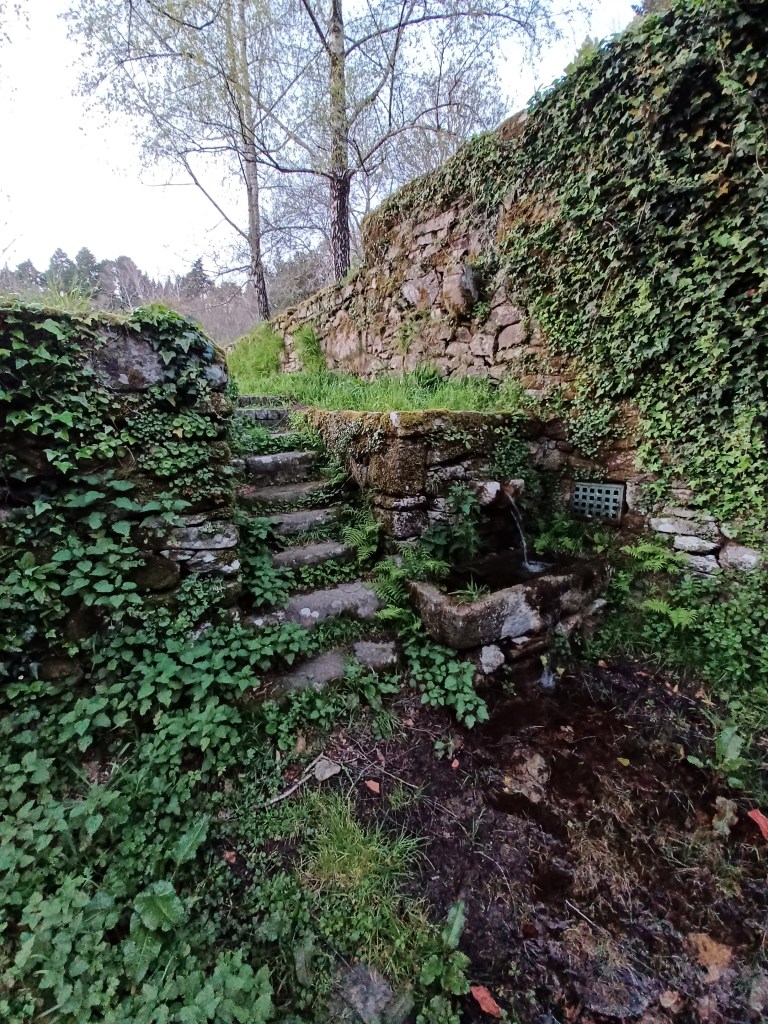
Old stairwell covered in moss and vines.

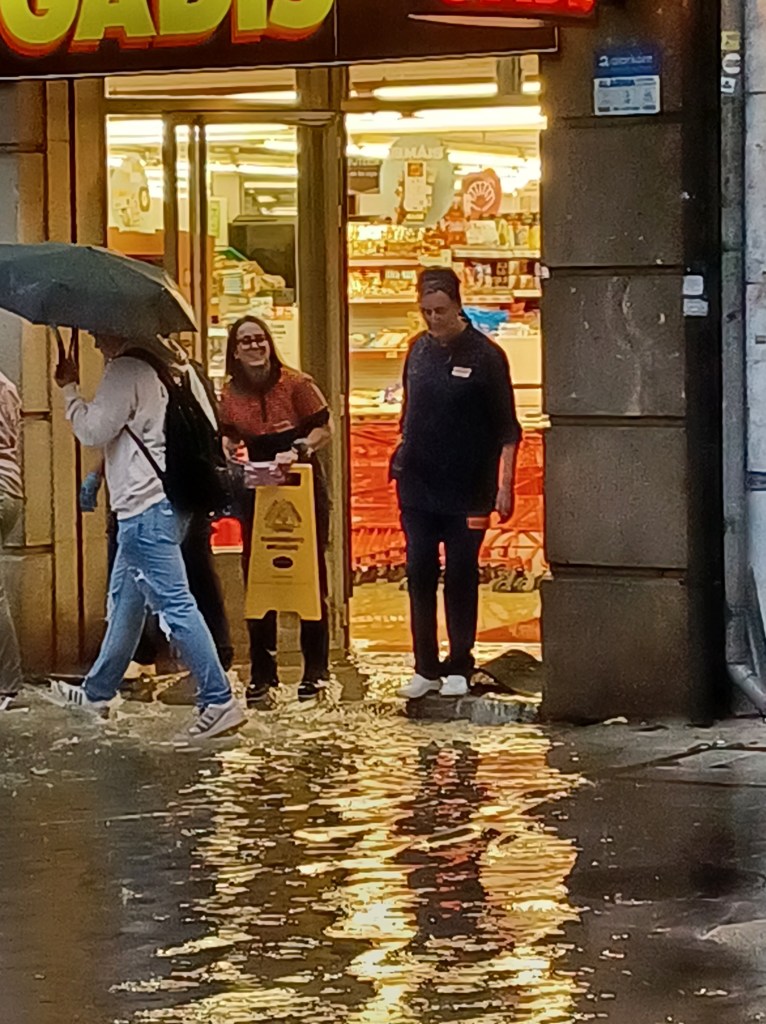
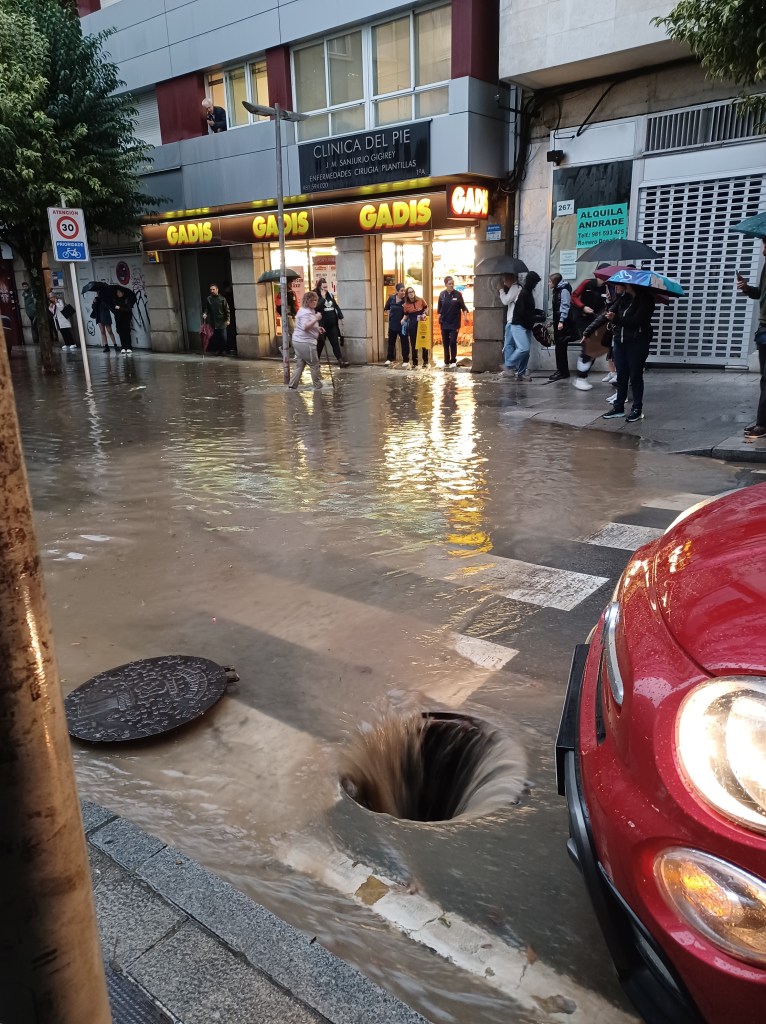
It rains for months. From October to March, there is rain. This is how she stays so green, so mossy, so strong. Those magical mountaintop springs must come from somewhere. Sunny days are so rare that they are always accompanied by the sound of laundry rustling in the breeze. Yes really, it rains so much we have synchronized laundry days, meigas, mothers, and Pilgrims alike. Maybe where you live you have wet and dry, but here we have wet, dry, and “it has been wet so long it won’t dry.”
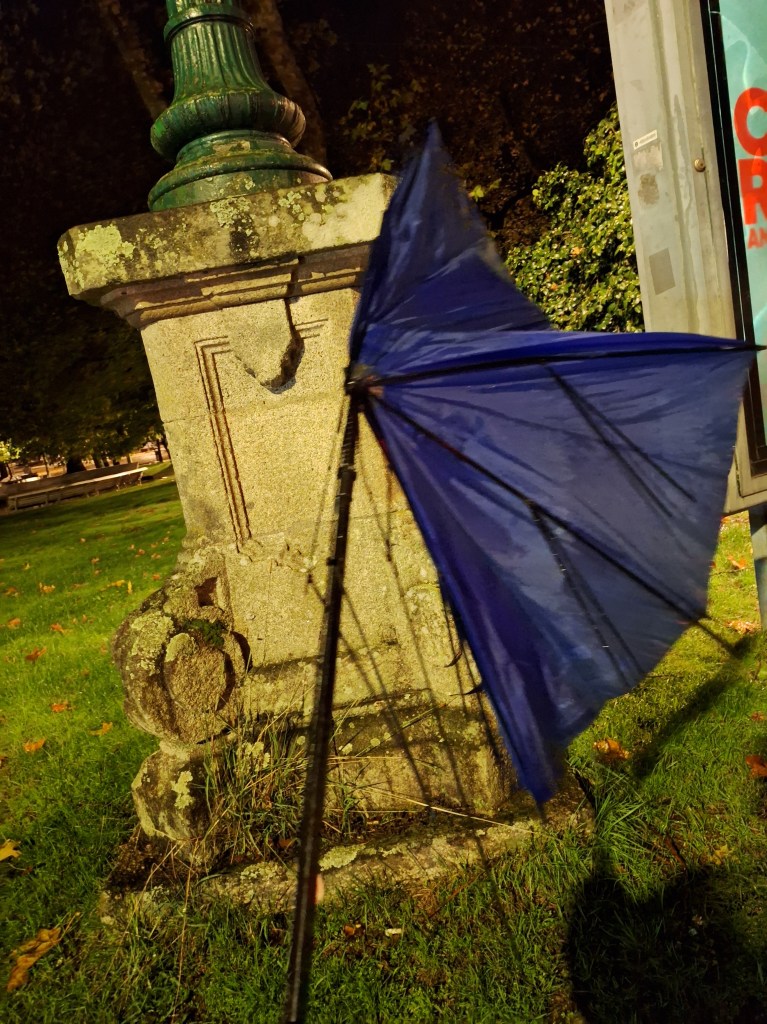
Escaped umbrella on a windy day.
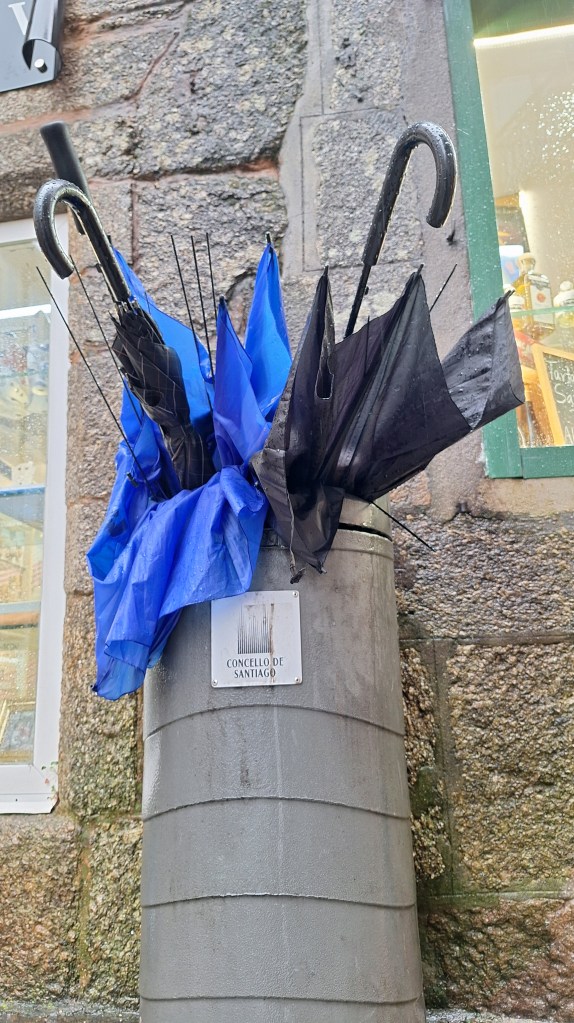
Three broken umbrellas in a trash can because galicia is cold and wet and windy and wet and windy.
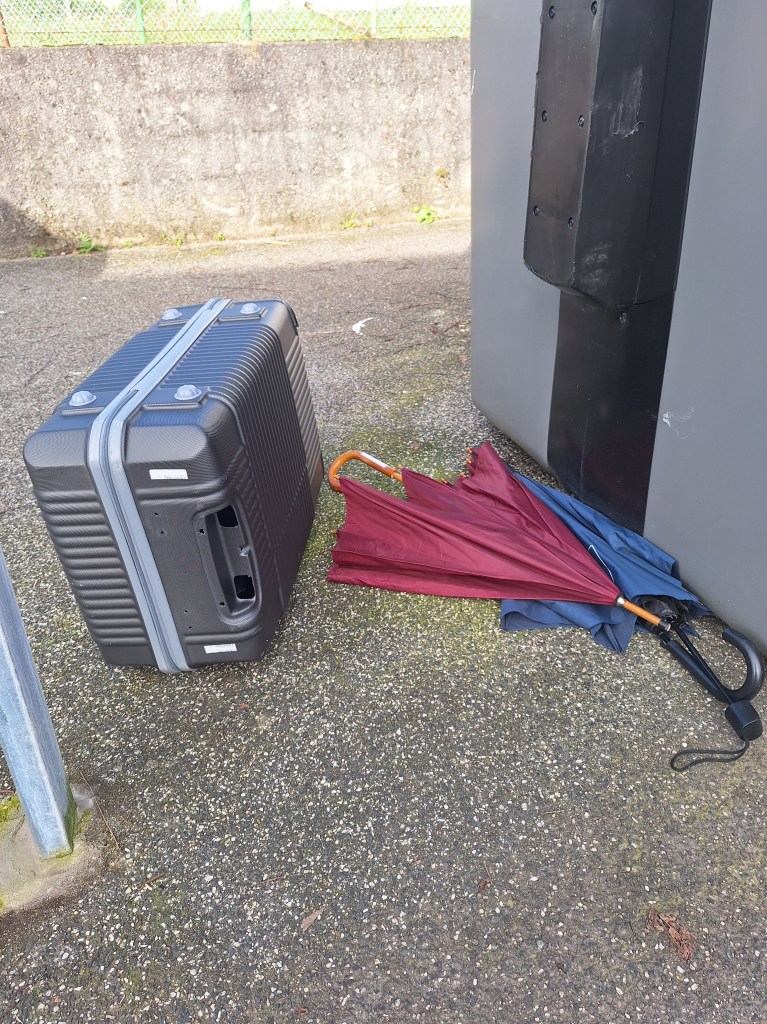
Two broken umbrellas and a suitcase because Galicia is traveling and rain.

To stake your claim in any place that belongs to her, you must fight. The ground is covered in thorned, creeping, tentacles reaching further and further each day. The plants here sting and bite. Toxos grow anywhere the ortigas do not and the moras grow in between. The meaning of the galician name for rascacú is where it scratches you while walking in the forest. There are plants with burning fibers, plants that look like the ones that burn, scratching plants, plants with big needles, plants with little needles, plants with thorns, plants with big thorns, plants with small thorns, and plants with big hidden thorns. I have probably missed a few. Today I asked my friend the name of a plant in a garden that we passed. He told me if it doesn’t have thorns he does not know.
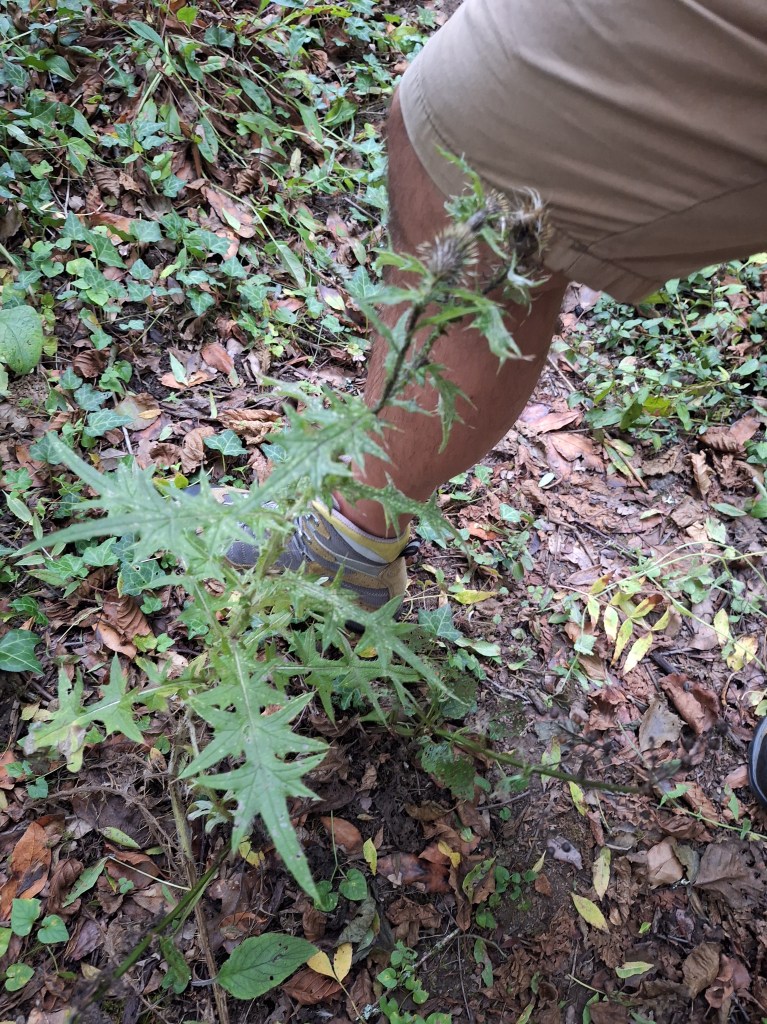
Another biting pokey plant of galicia but I dont know what it is called.
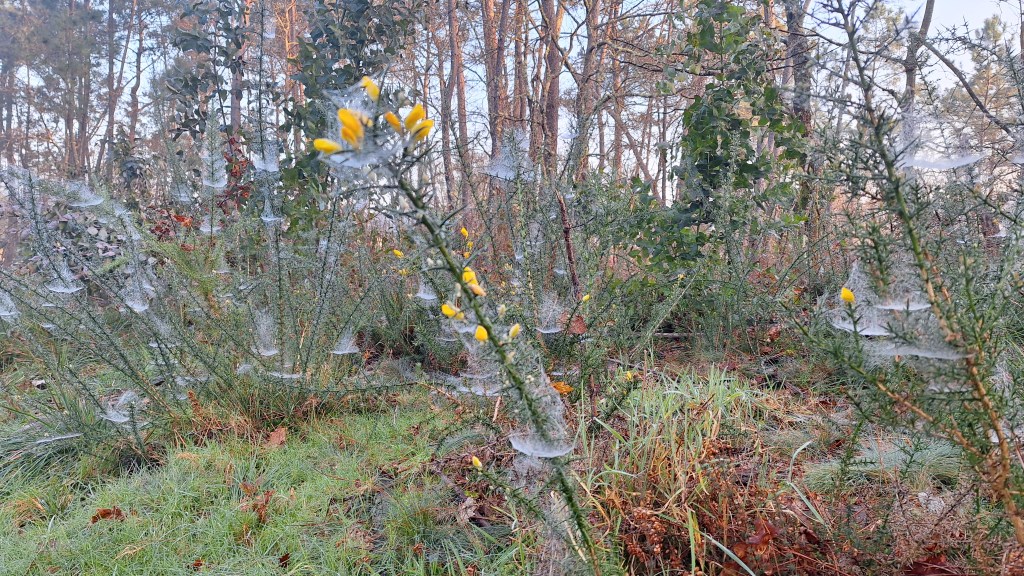
Spider webs on toxo death spines.

On the left there is a plant that is covered in spines, I dont know what it is called. Above and below are spiders trying to escape the rain on toxo thorns.
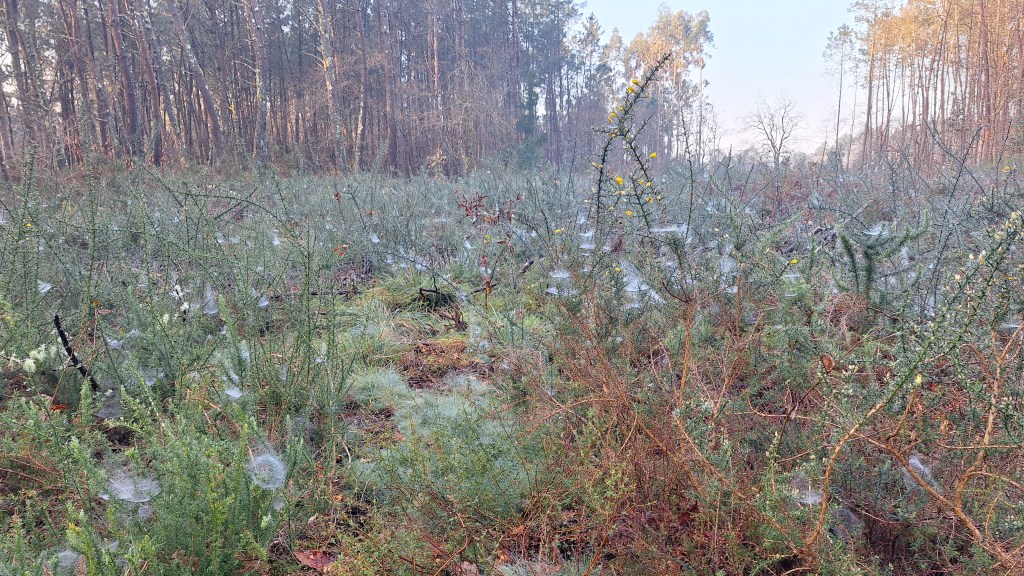
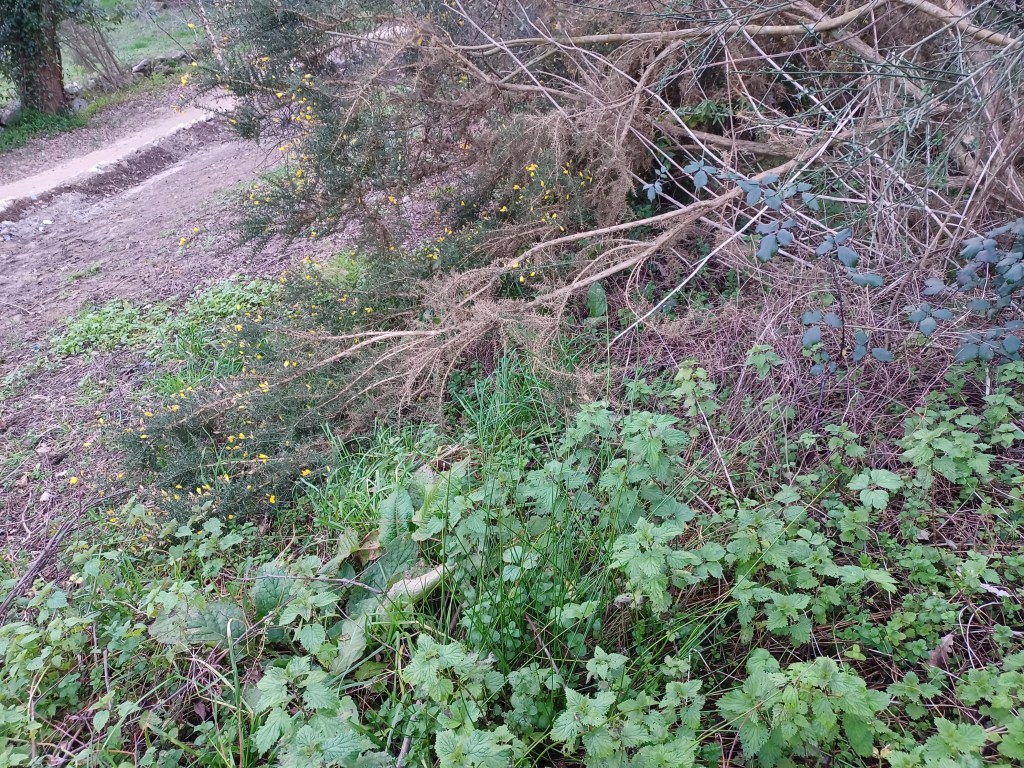
A whole field of spiders and pokey doom spikes.
Toxos, Ortigas, and Moras growing together in a stinging pile of doom. Really dont walk bearfoot in Galicia.
Yes, this is actually a thorny toxo bush with its branches stretching into stinging nettles and blackberry brambles. Galicia is not messing around. Wear shoes.

Parks even have to close during storms because no one wants to experience falling castañas. These will pop your bike tires, and do not cease to be sharp after 6 months on the ground in the rain. But they are the life blood of Galicia. There are festivals in every city here to celebrate the harvest. Magosto is a deepy rooted Galician celebration of the chestnut harvest, with some saying it is rooted in Roman or Celtric traditions such as Samhain. Castañas have been a staple here since before anyone thought to write it down. They are hardy trees, the nuts are packed with nutrients, and their harvest comes after the heavy rains. It is easy to imagine how cherished this annually occuring natural windfall would be, especially in years where drought or rain might impact other crops. The festival coincides with All Saints Day making it a celebration of harvest, death, honoring ancesters, and celebrating the coming winter months all at once.
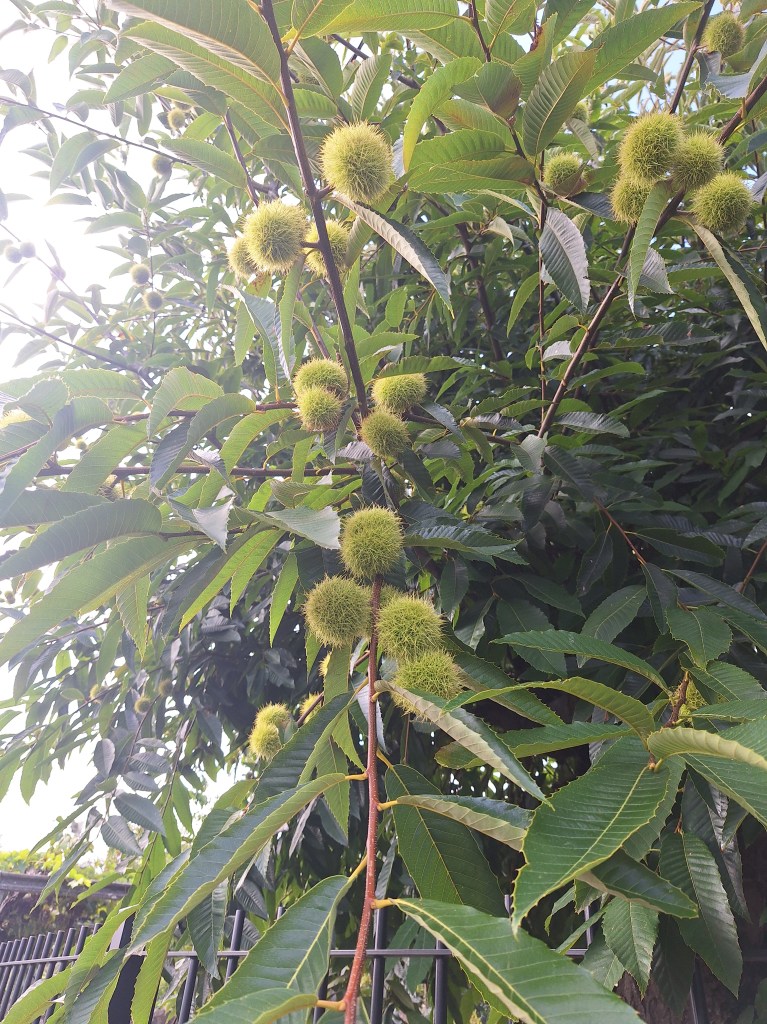
Green castañas on the tree.
Spiky death needle nuts on a tree.
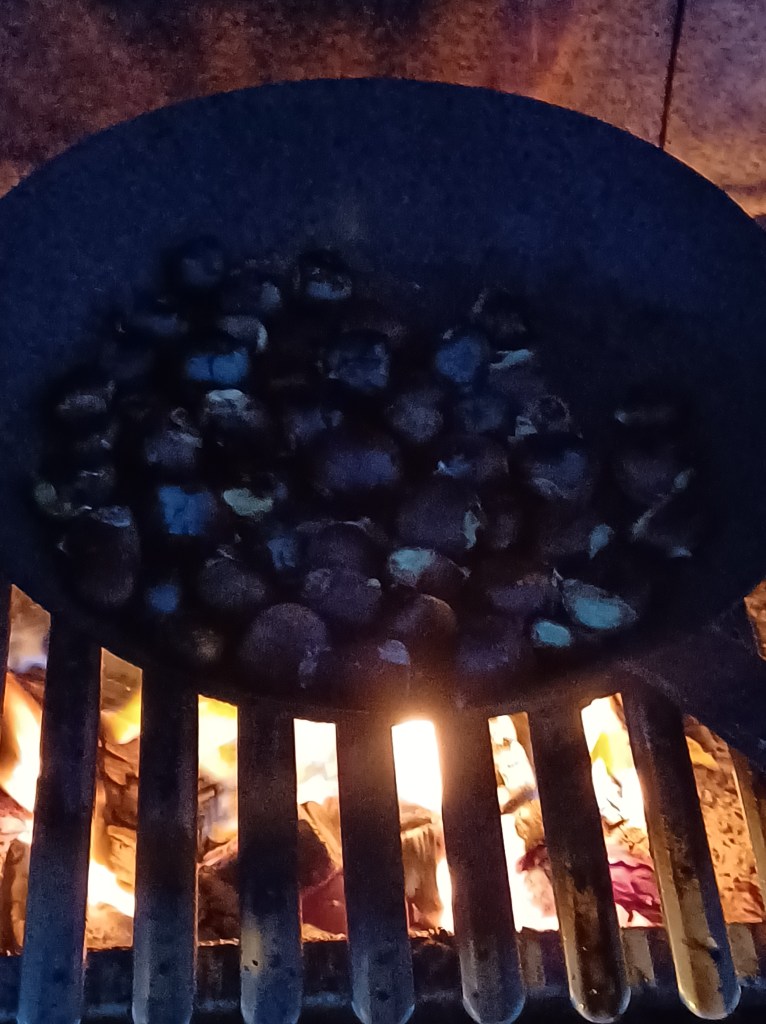
castañas without the needle covered shell roasting on a flame.
Naked death needle nuts roasting over the fire.

And this week marked the beginning of my adventures for the year! There was sun. Beautiful, glorious, soul replenishing sun. The flowers are emerging. Galicia is green and yellow and beautiful.
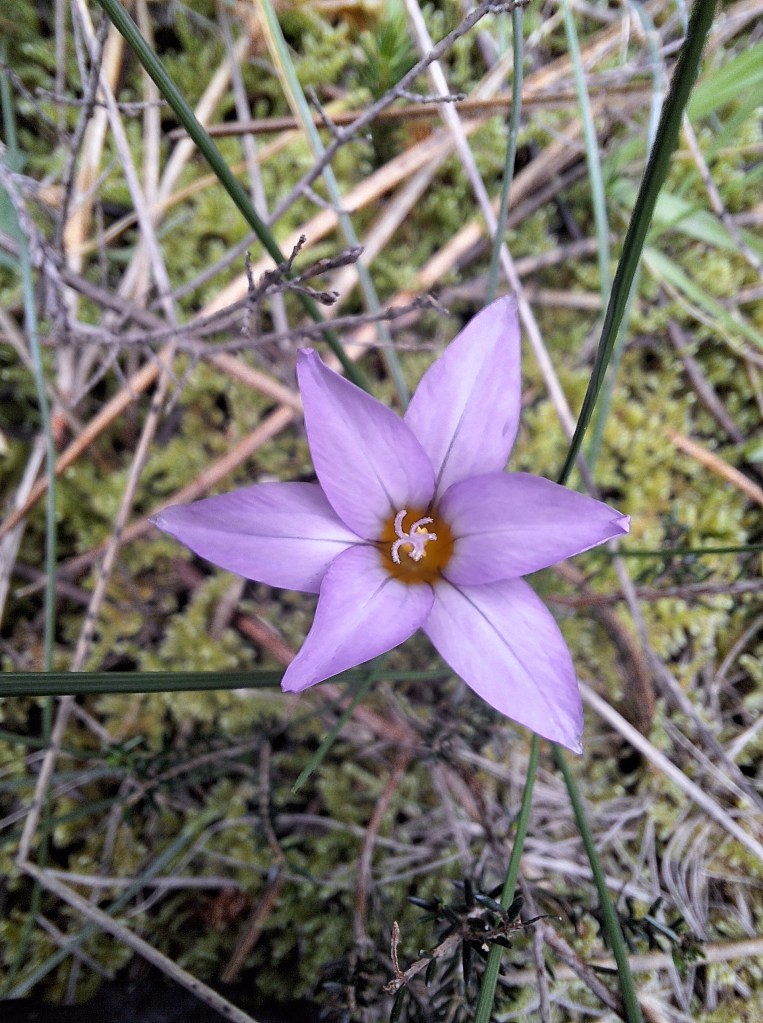
I have been absent from writing about my adventures for a while. I took up a contract that would allow me to save enough money to spend the next two or three years traveling, writing, and working on a secret project I am very excited about. It was too many hours each week in front of a computer, but I went on many adventures to share with you. I just need to post them. I plan to back fill those adventures from here as well as add new ones this season.
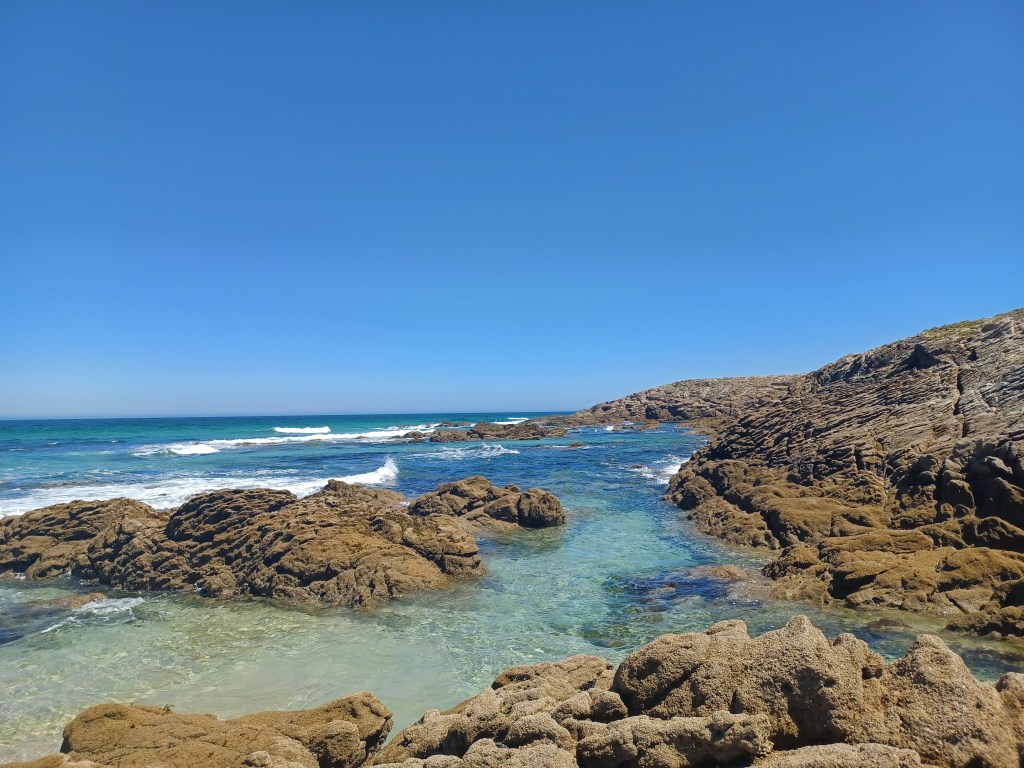
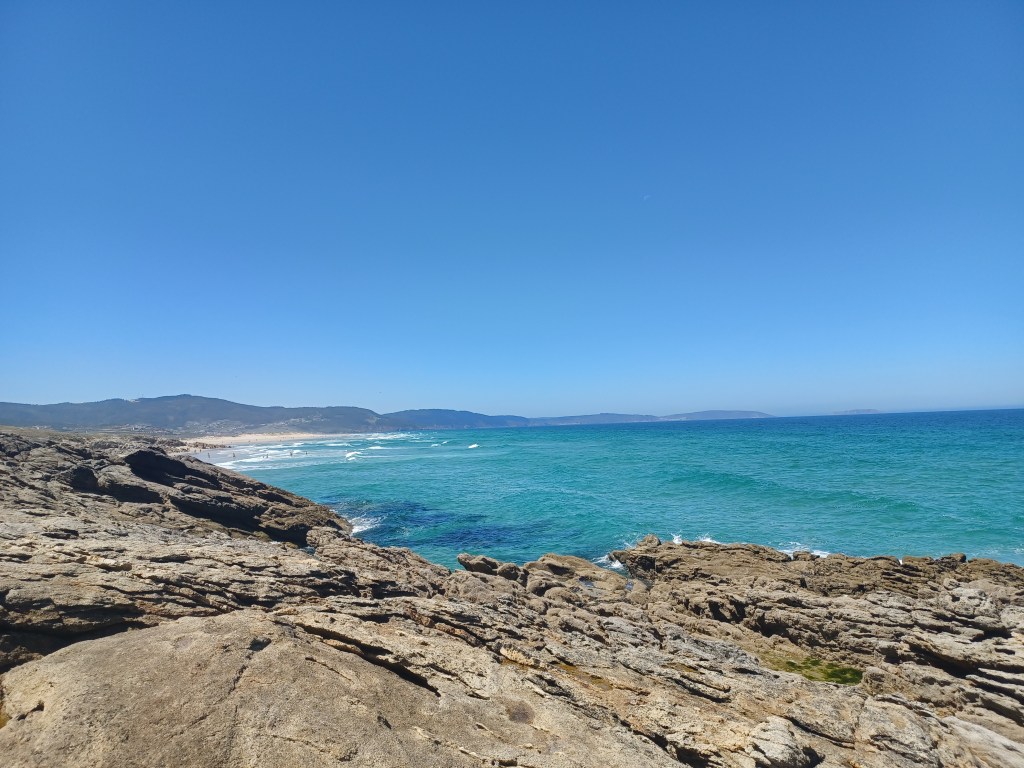
Praia Pedra do Sal

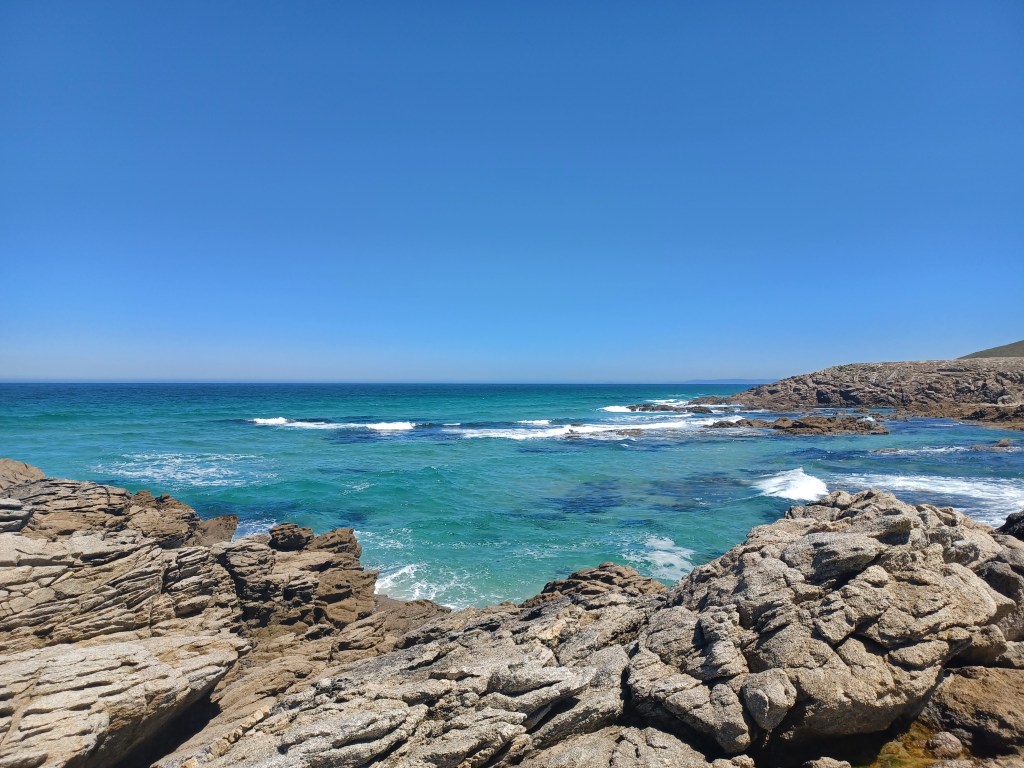
Praia Pedra do Sal is a beautiful beach in Carballo near Coruña on the northern coast of Galicia. This is a great spot for an afternoon with the family. There is ample parking, showers, and even public transport. On one side, there is a long, flat, open, white sand beach. There were a lot of people there enjoying with young children, building castles, and playing in the sand. On the other side, there are rocks and crevices forming little pools to explore the wildlife living within.

Overall, a great spot for a relaxed afternoon dozing in the sand.

Caldeiras do Castro

This was a nice afternoon hike. It was not a particularly long route, and we actually extended it a bit beyond the park because the weather was nice. The route was 6km in total, there and back, and mostly a flat easy walk.

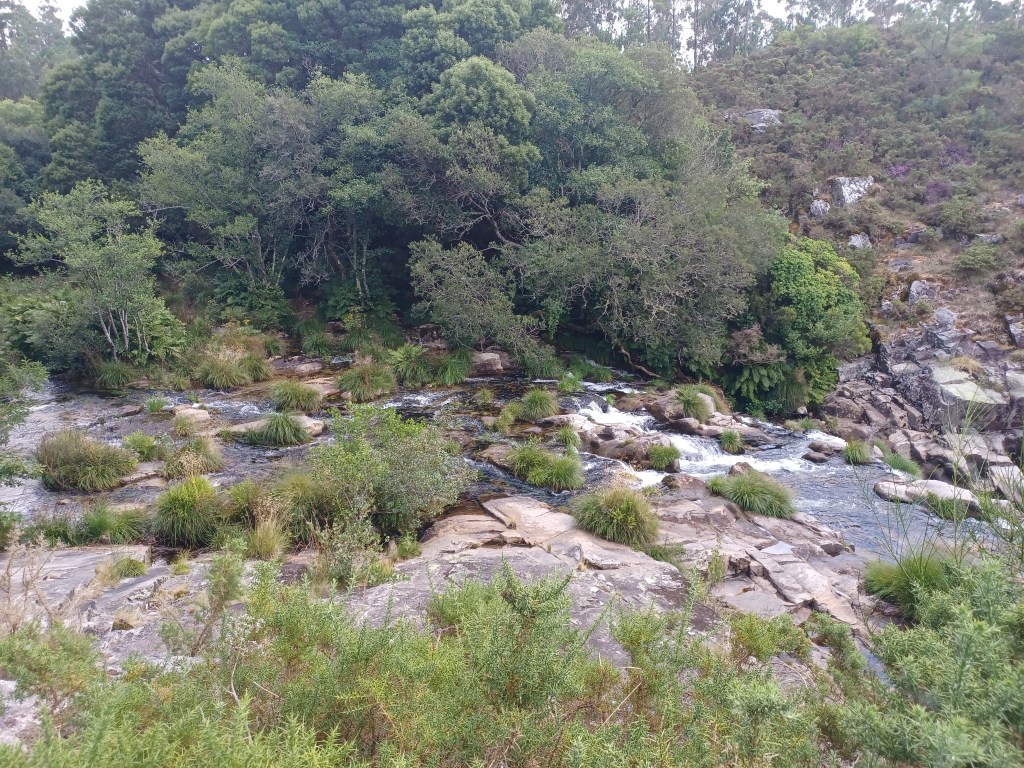
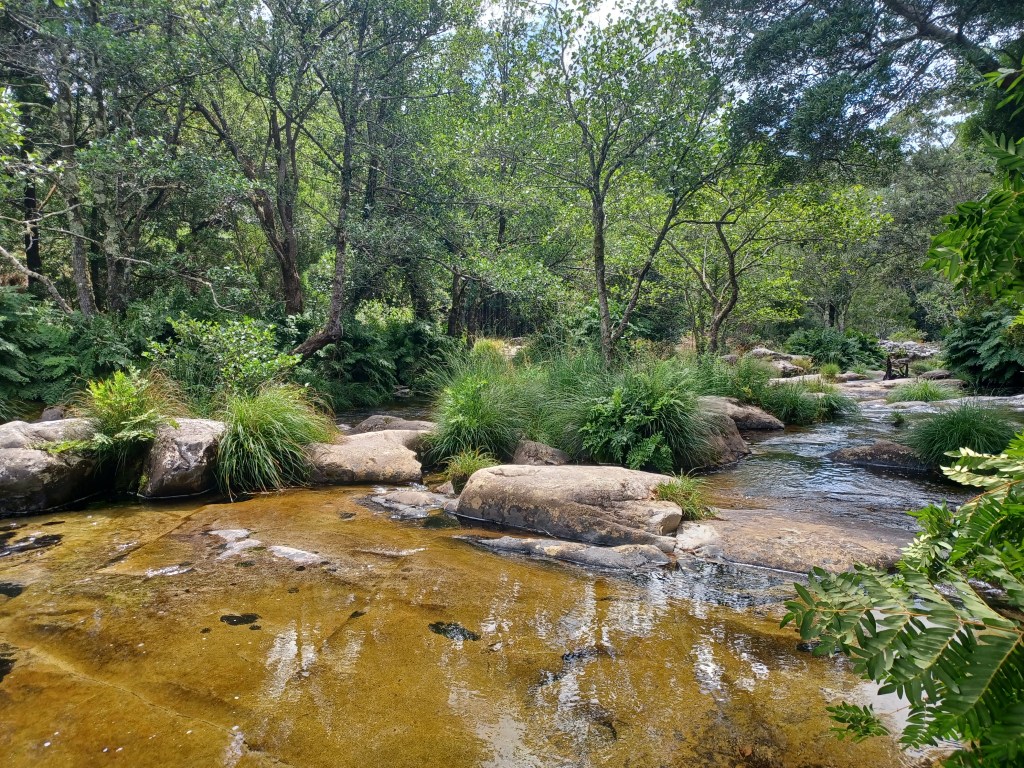
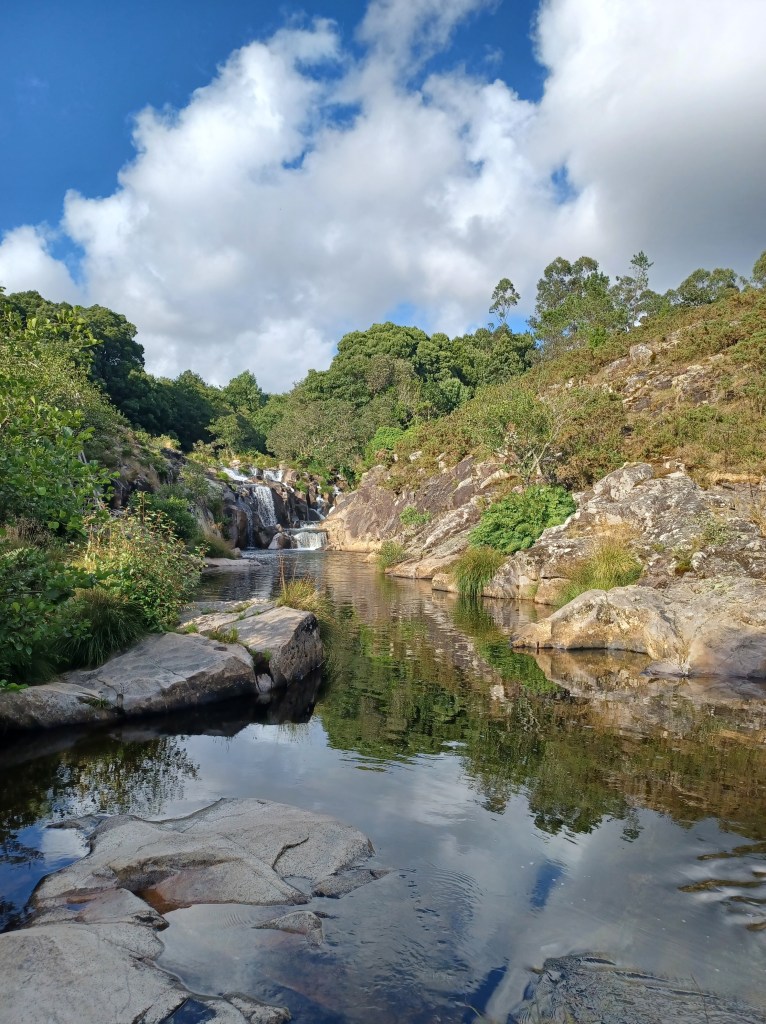
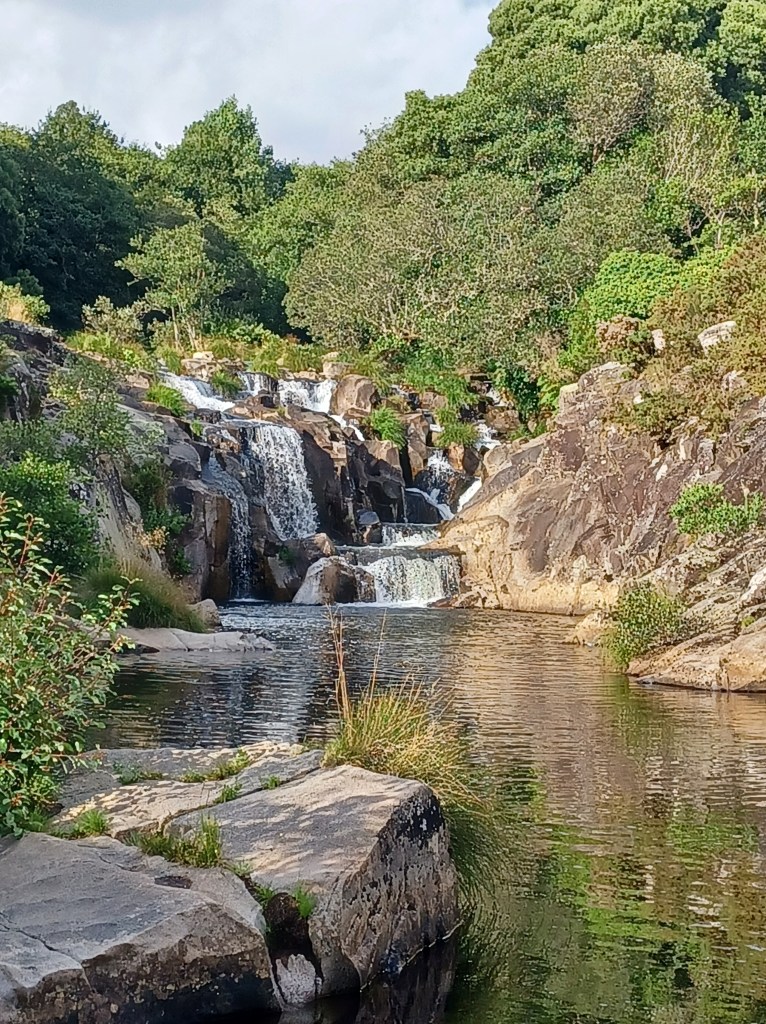
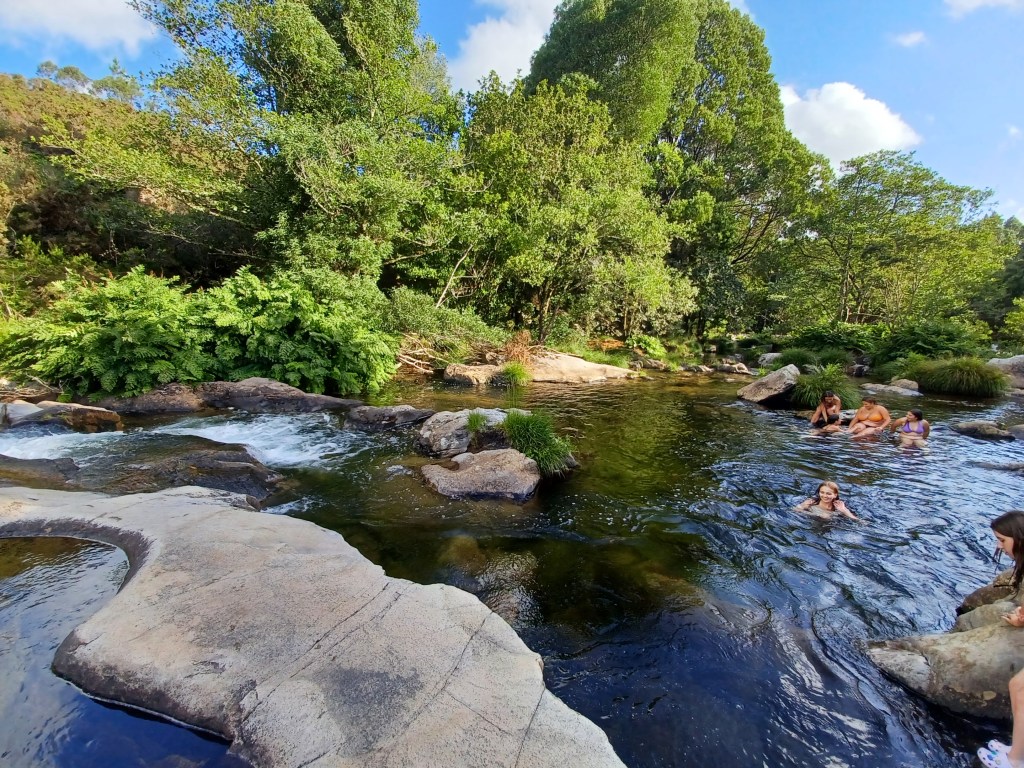
The path starts in a park with a few walking paths. Caldeiras do Castro has a series of little pools that form naturally in the riverbeds. There is a walking path that overlooks the baths and contines along the river.

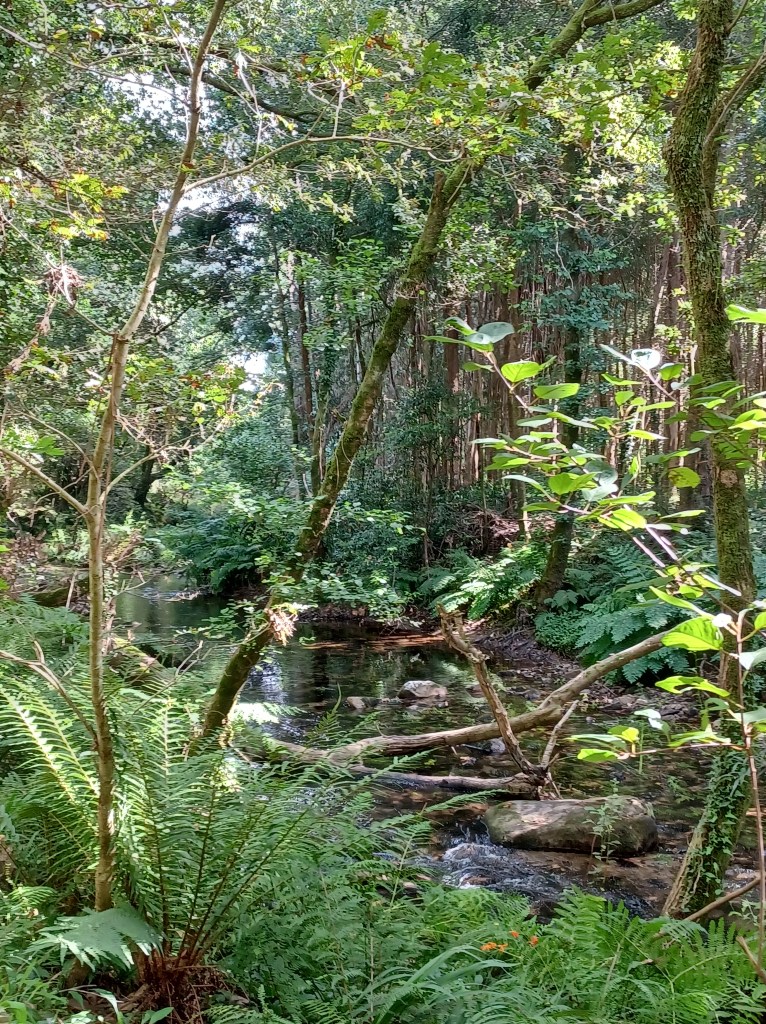
The larger walkway was not very long, and we found ourselves “como cabritas” pretty quickly. But the trail is clear and continues along the river. It is lovely and Galician Green.

After a short distance, the path moves off from the river and it is not straightfoward to recover. There is a farm blocking the river access, so you have to walk along the perimeter until you can guess where it is polite to cross down back into the river.

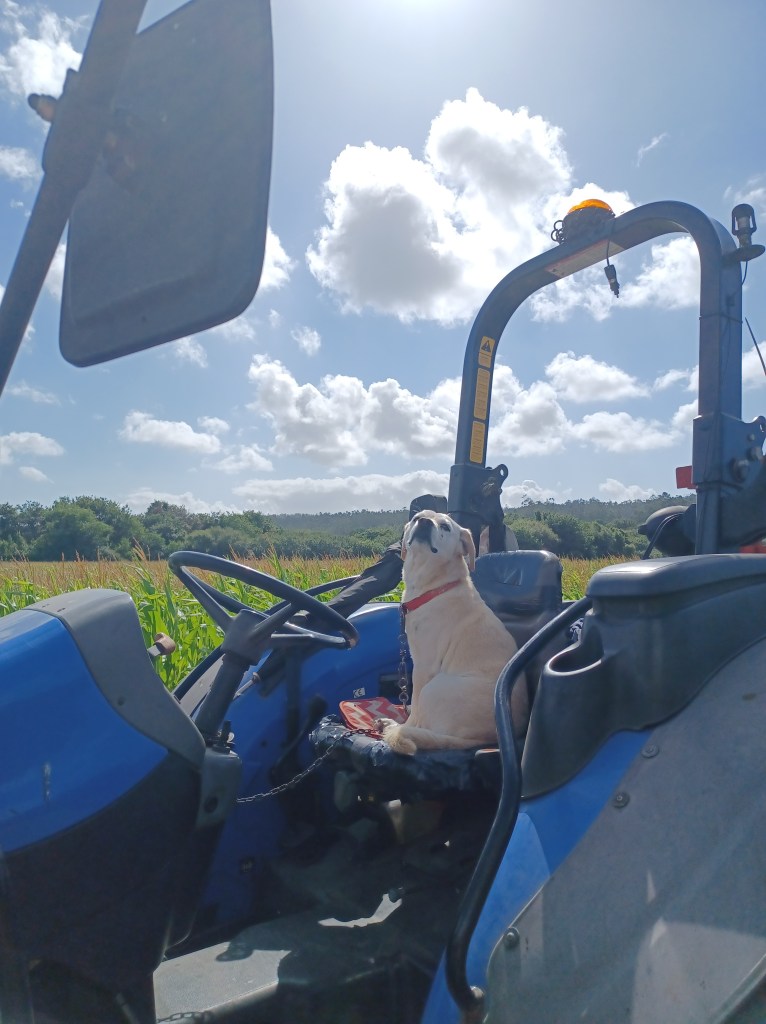
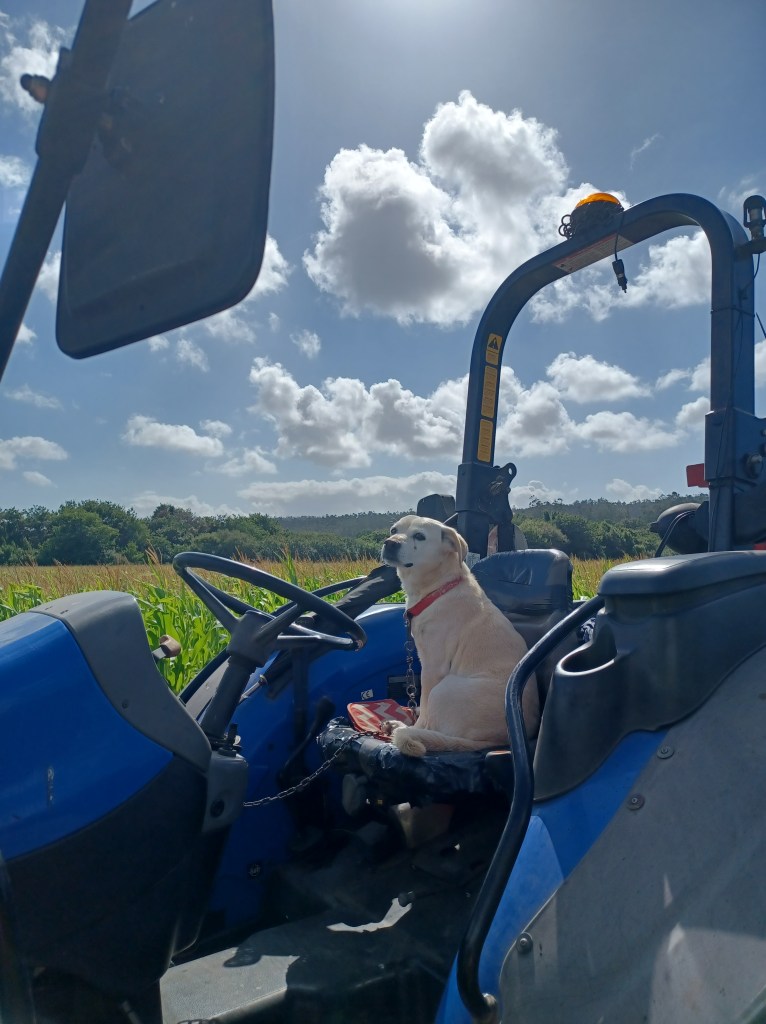
Fortunately, I encountered a farmer driving his tractor. He was able to give me directions and a few tail wags. He was, indeed, a very good boy. He pointed us down the middle of the farm where there was a small path between two fields.

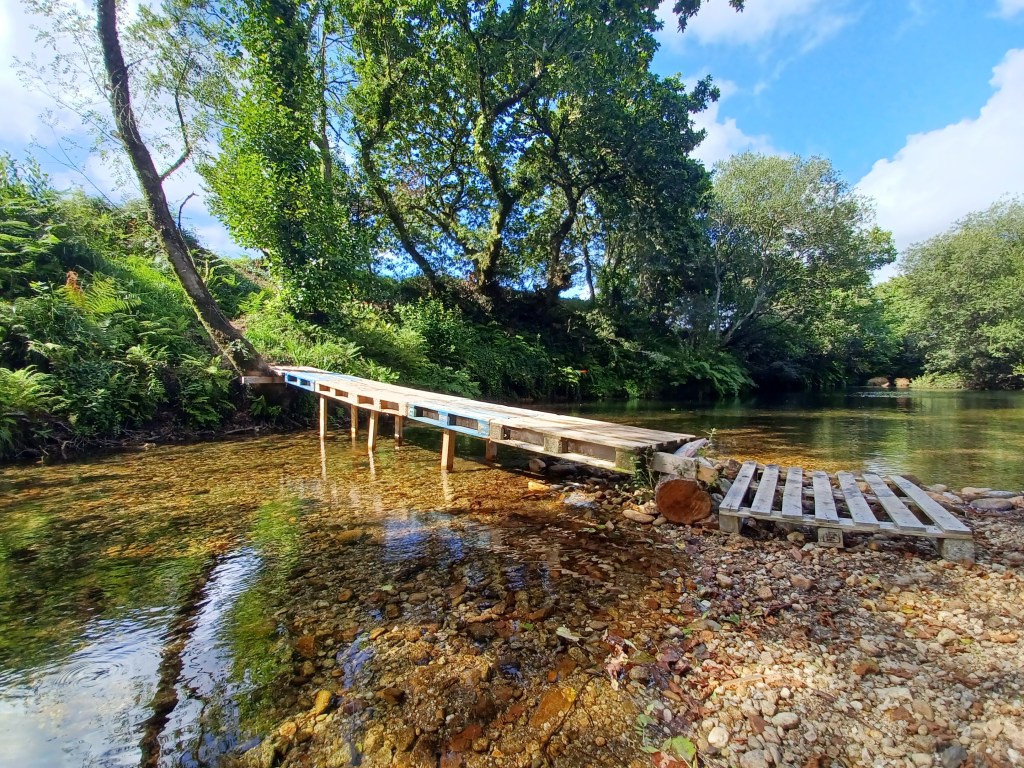
On the other side of farm was a very sturdy bridge… so of course I had to cross it.

And on the other side was this really lovely island where the river split to flow around the sand bar.

The island was not very big but it was pretty! We had hoped to cross the river here to return, but there was not a second bridge so we went back the way we came.

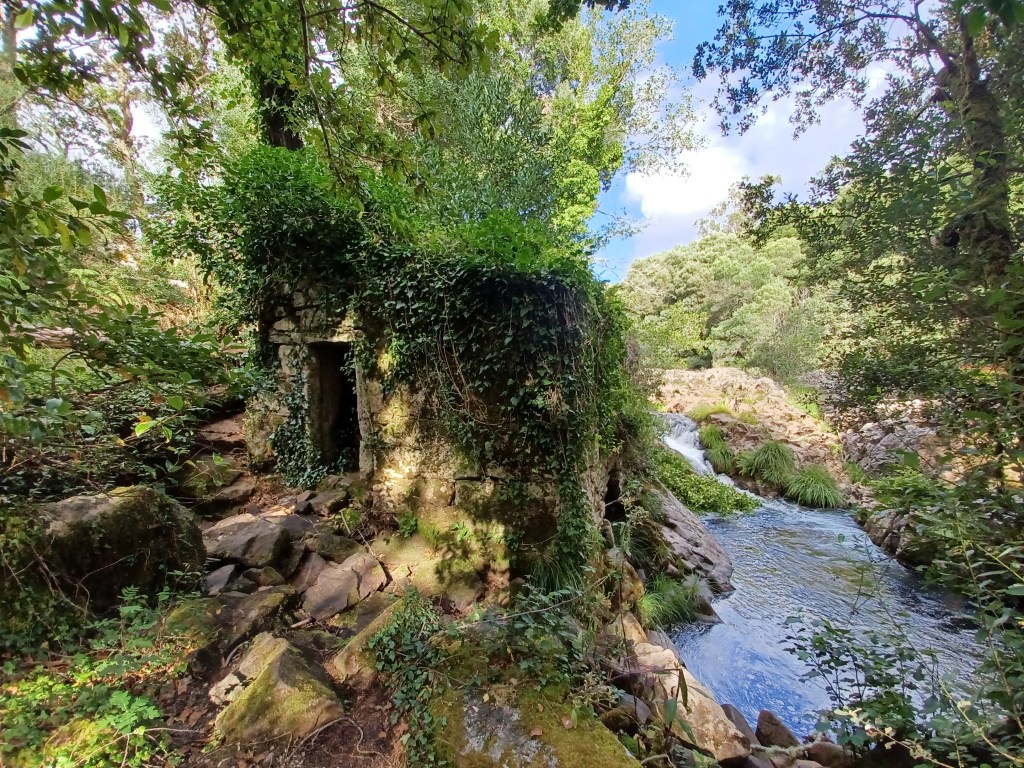
We followed the river back and passed a little mill.

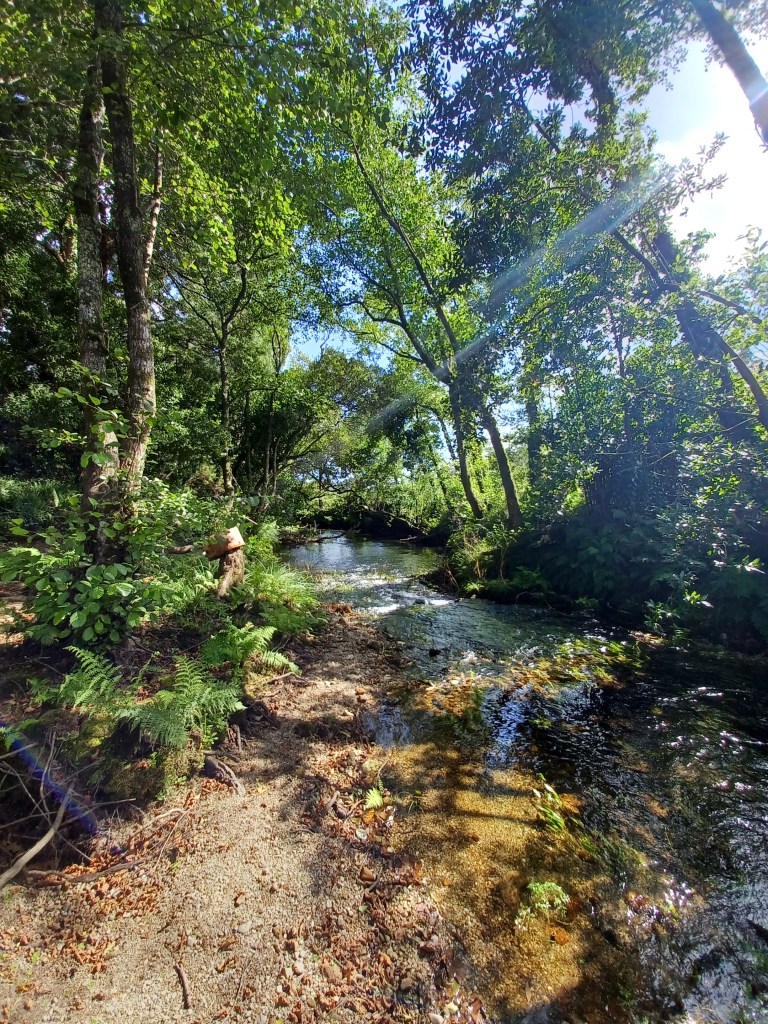
Returning to the car, we took the route closer to the water rather than the path higher up, so this is essentially the close-up of the first photo in the series. It looks like aa nice place to take a swim. It was a little cool for me by the time we came back, but I would absolutely return.

Farmer Dog was so cute he needed two photos. I could not decide which was more adorable so here is the other.

Kinga Haudek Artista Joyera, Santiago de Compostela, Spain

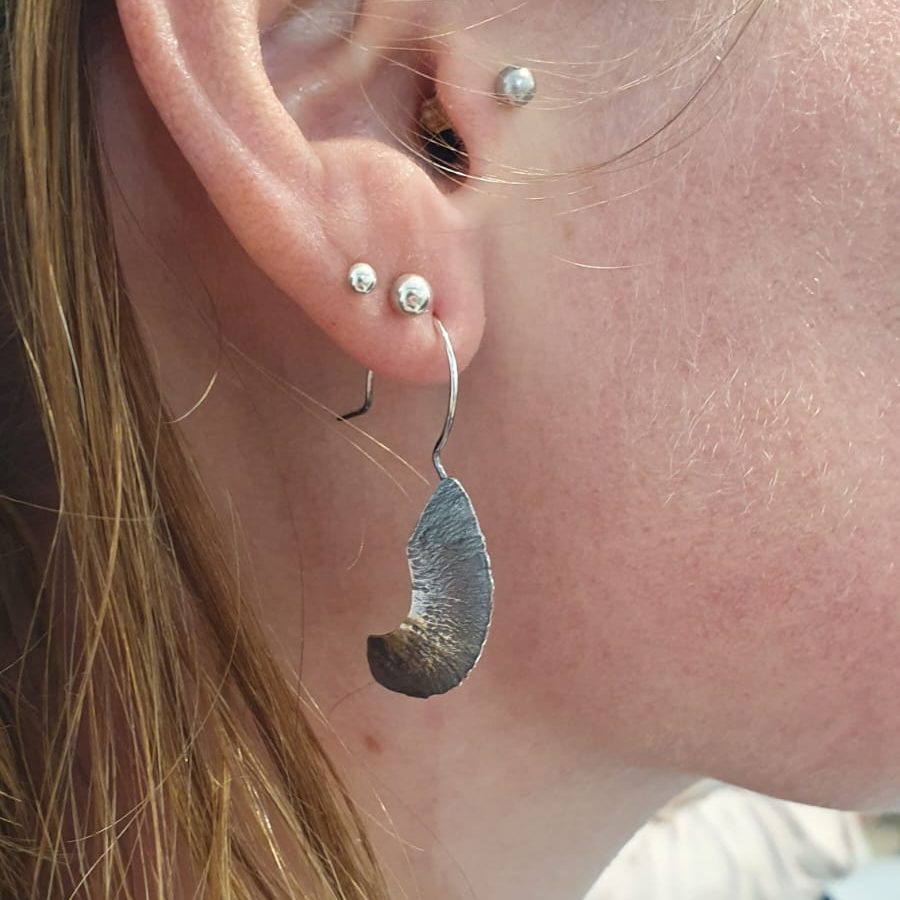
Kinga Haudek Artista Joyera is one of my favorite stores in Santiago de Compostela. This small jewelry shop on rua San Pedro is located in the historic old town. The stone walls and dark wood window frames lend perfect contrast to her organic designs. You can imagine yourself in the same place, making the same purchase 200 years in the past.

When you walk in, you may find Kinga hard at work crafting something new. Everything is crafted by her hand in the store. Her name is the brand, and the moment you meet her you will understand why. Lost in focus, she always looks a little surprised and delighted to see visitors. Her smile will be warm and welcoming when she invites you into the store.

Kinga is Hungarian by birth and Galician by spirit. A brilliant academic, avid adventurer, and an artist by nature. She studied sociology in Hungary, silversmithing at the Mestre Mateo School of Art and Design, and obtained the official Galician Craftsman Certification. Her curious and intelligent nature shines through each piece and gives a brief glimpse of something she saw or felt on one of her many adventures. Kinga is a highly talented artist with designs inspired by elements of the city and the sea.
For photos of her work, I suggest visiting the website. I could not do justice to her creations. Instead, I will document the jewelry making class I attended with my daughter!

Kinga offers classes in her workshop to make some of the more simple pieces. The price of the course includes all of the supplies needed and a half day of instruction. Instruction is limited to groups of 3 people to insure a quality experience for everyone.
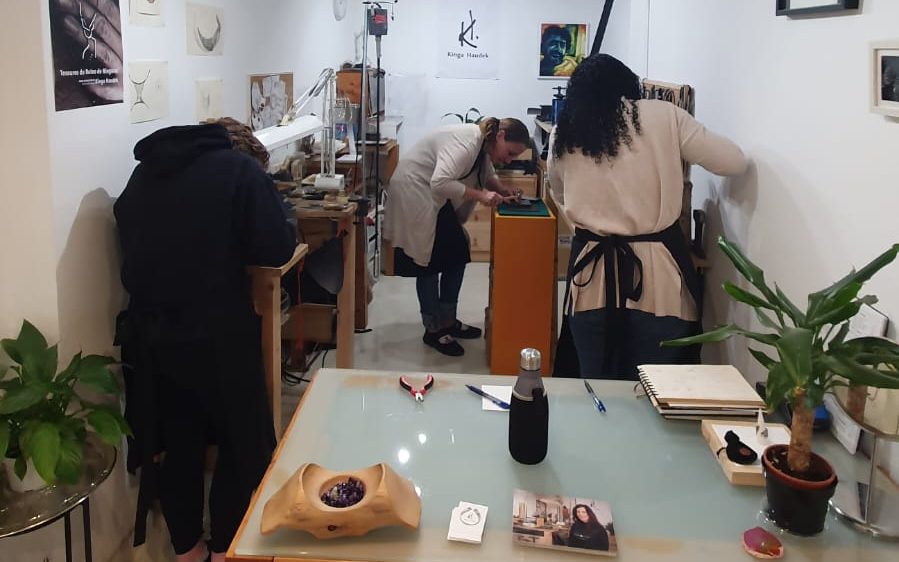
Our course began at 10:00 in the morning. She walked us through the process in both Spanish and English. I am not sure how many languages Kinga speaks, but the course is available in English, Spanish, Galician, and Hungarian for sure.

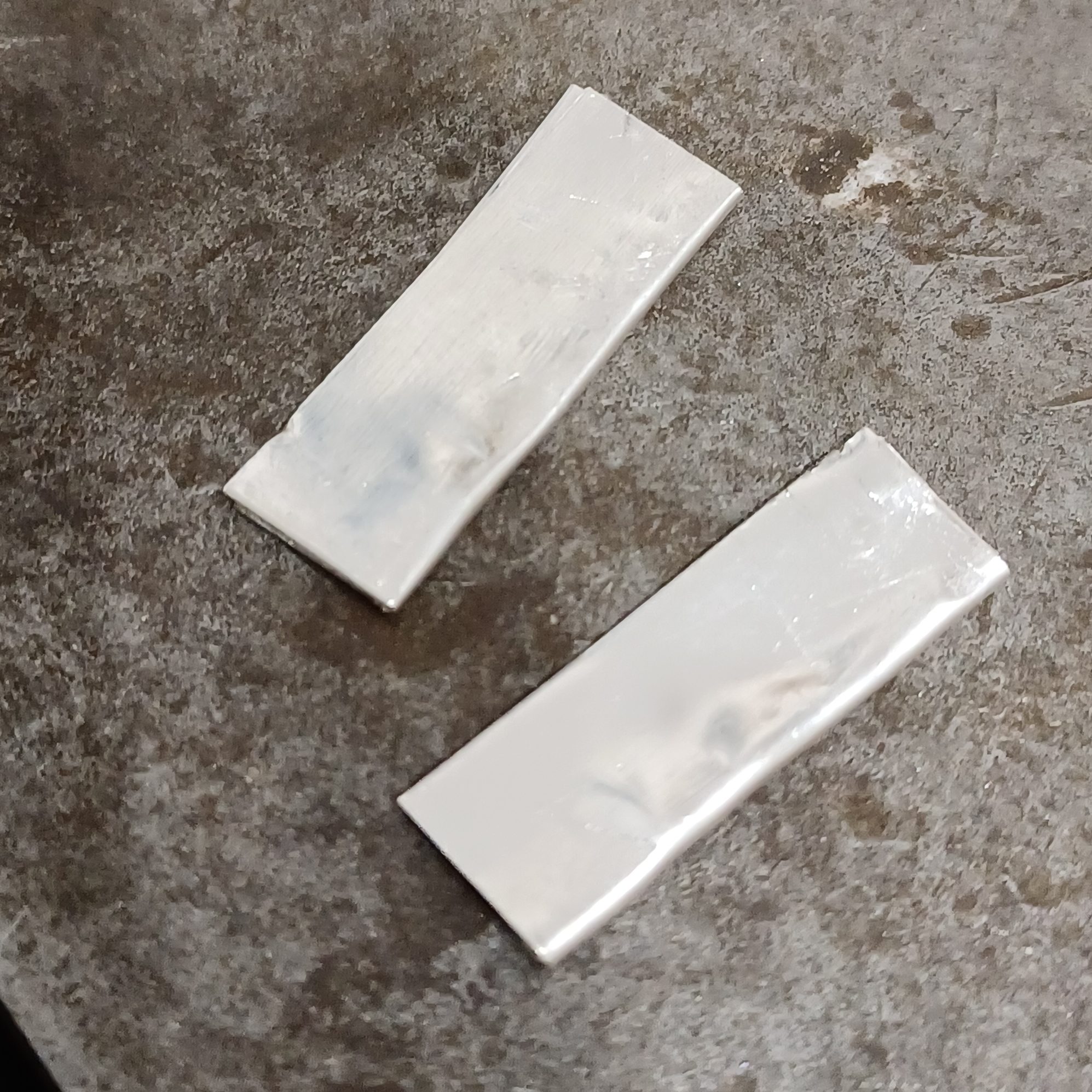
I was admittedly a bit converned when she handed me this little pieces of silver and told me I was expected to turn them into something beautiful on the first try. But hey… I´ll give it a try.

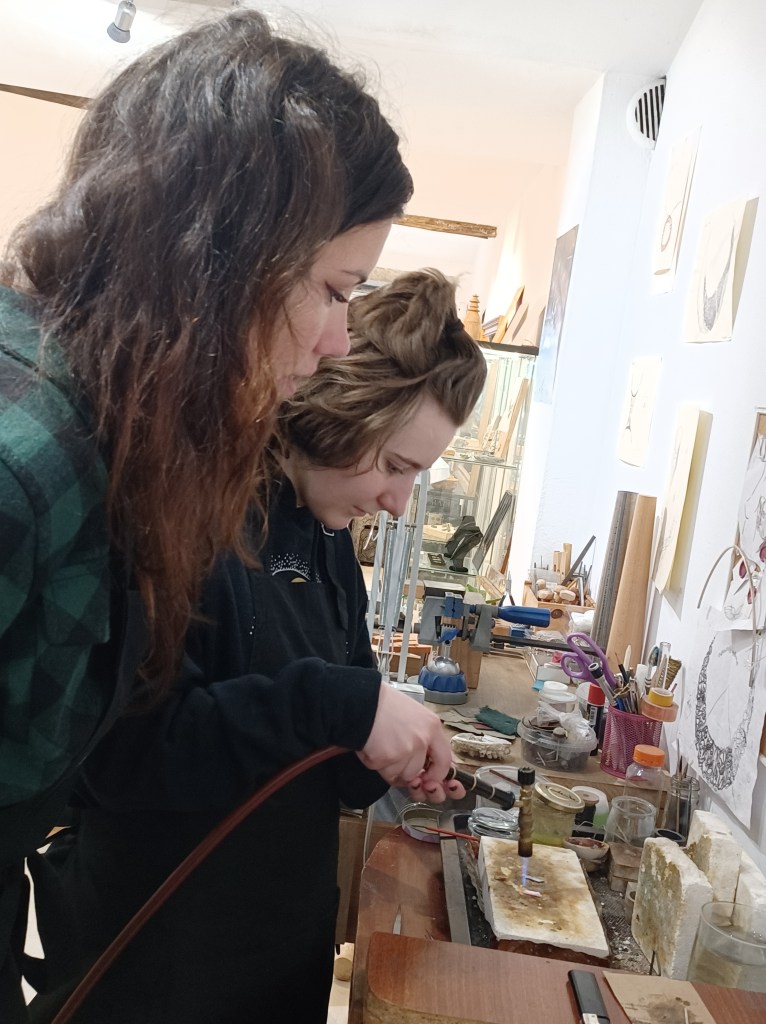
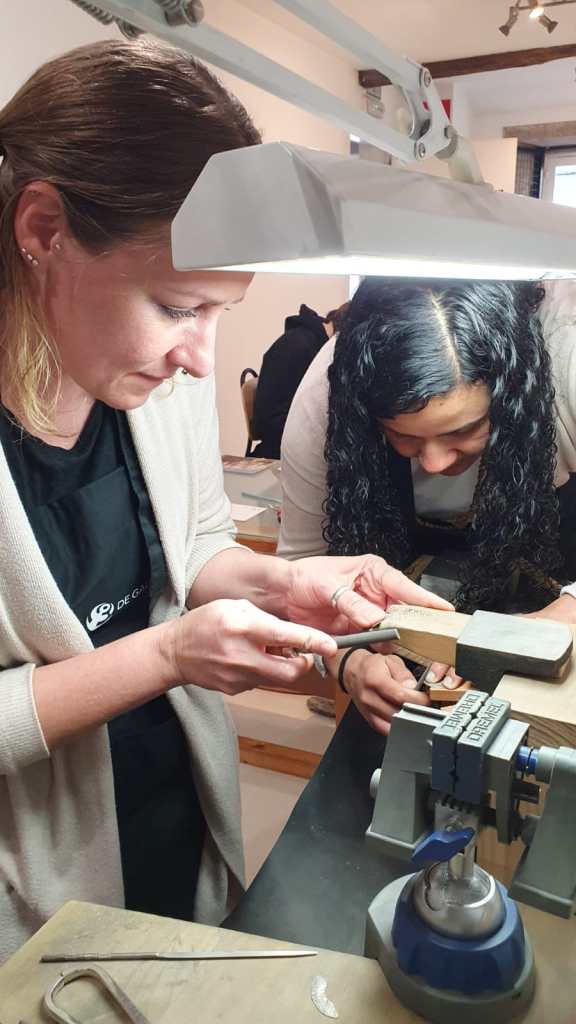
She told us how to properly hammer each piece. We all set to work at our own station. We had a variety of tools at our disposal and a varying weights of hammer.

We would hammer a bit and then heat them before returning to more hammering. I was a little nerrvous to use a torch for the first time, but it was much easier than I anticipated.

I was a bit too timid and struggled to properly align my strikes. Kinga came and lent a hand to put me in the right direction. She helped me to correct the curvature for a more symmetrical pair.

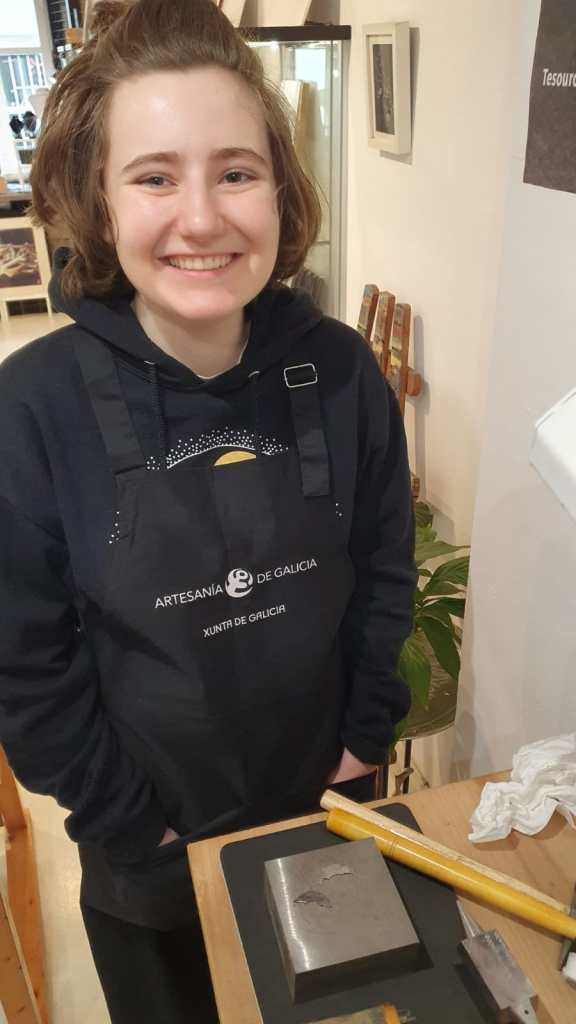
My daughter, on the other hand, was quite adept at this process and managed to complete hammering more quickly than anyone else. This is her gloating.

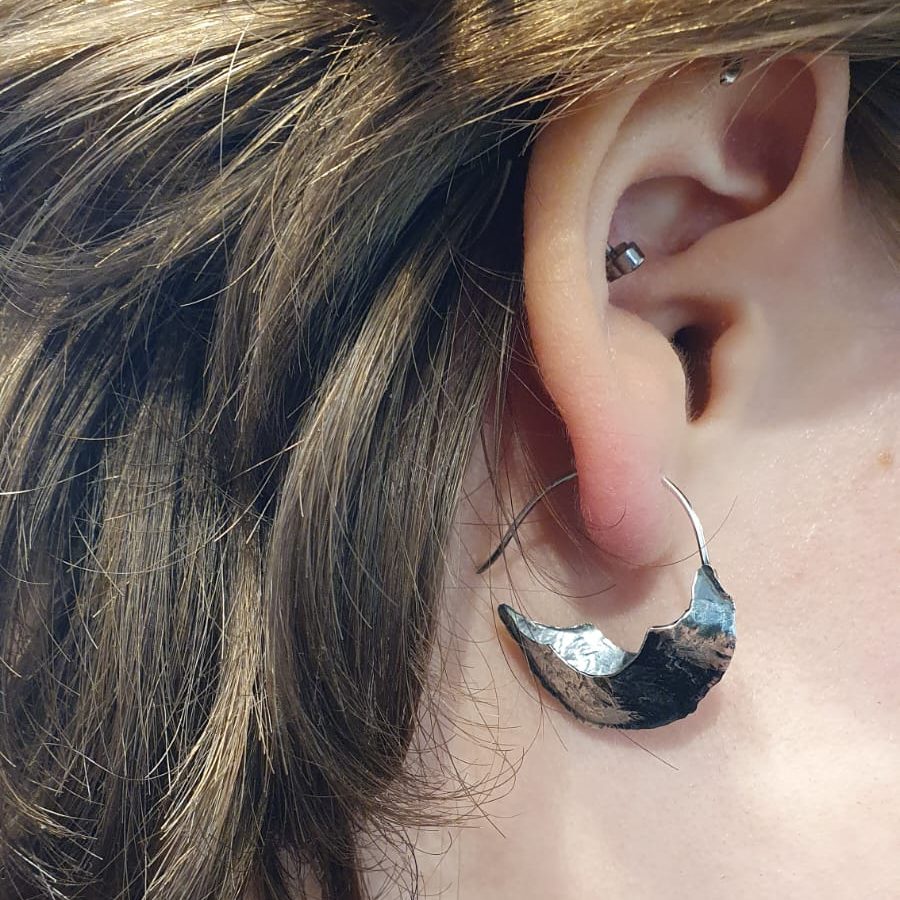
After a bit of hammering and heat and I was pretty excited to have these to show for my effort!

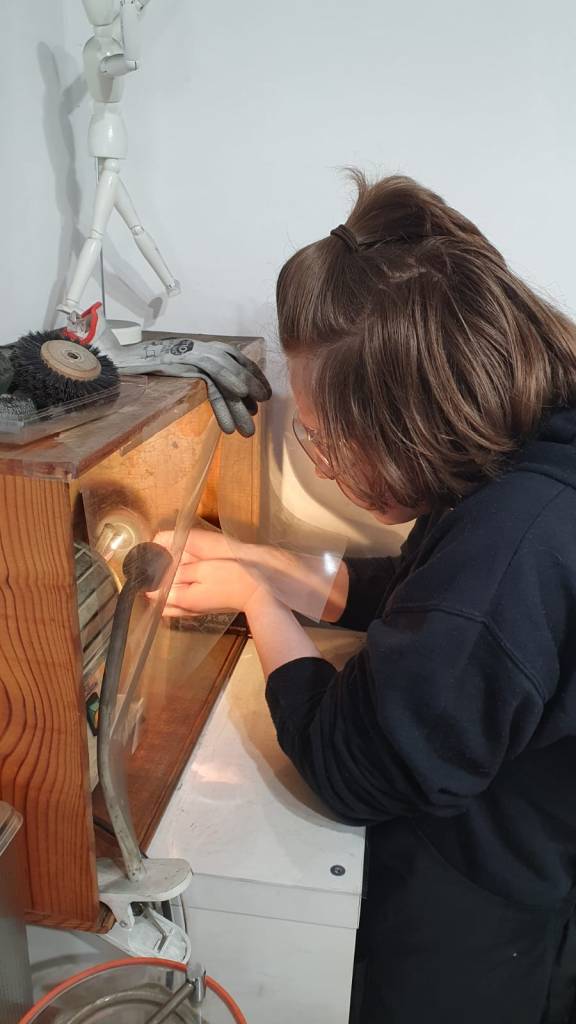
Once the earrings were shaped, we oxidized them with an acidic sulfur compound and took a short break while they soaked. Next, we learned to craft and solder the earring posts, trim and file the excess, and finally to polish them on her rotary buffer.

The end result was exciting. Each pair was unique even though we all started with identical pieces of silver, similar tools, and used the same methods.

We completed our earrings around 14:00. With a sense of accomplishment and pride in our artistic eneavors, we all posed together for a final class photo and had a little lunch at a restaurant down the street on Rua San Pedro.

I think my favorite part of this was the sense of pride my daughter took away from the activity. She came home and called our family back in the US to tell them what a great job she had done. It was funny listening when she did not know that I could hear her. ¨I was so good at hammering. I finished before everyone else. I was much better at it than Mom.¨

Would highly recommend this activity when visiting Santiago de Compostela. You would need to contact Kinga before planning the adventure to see which classes might be available and which weekends. But definitely something worth doing in Santiago.

Fervenza de Toxa, Galicia, Spain

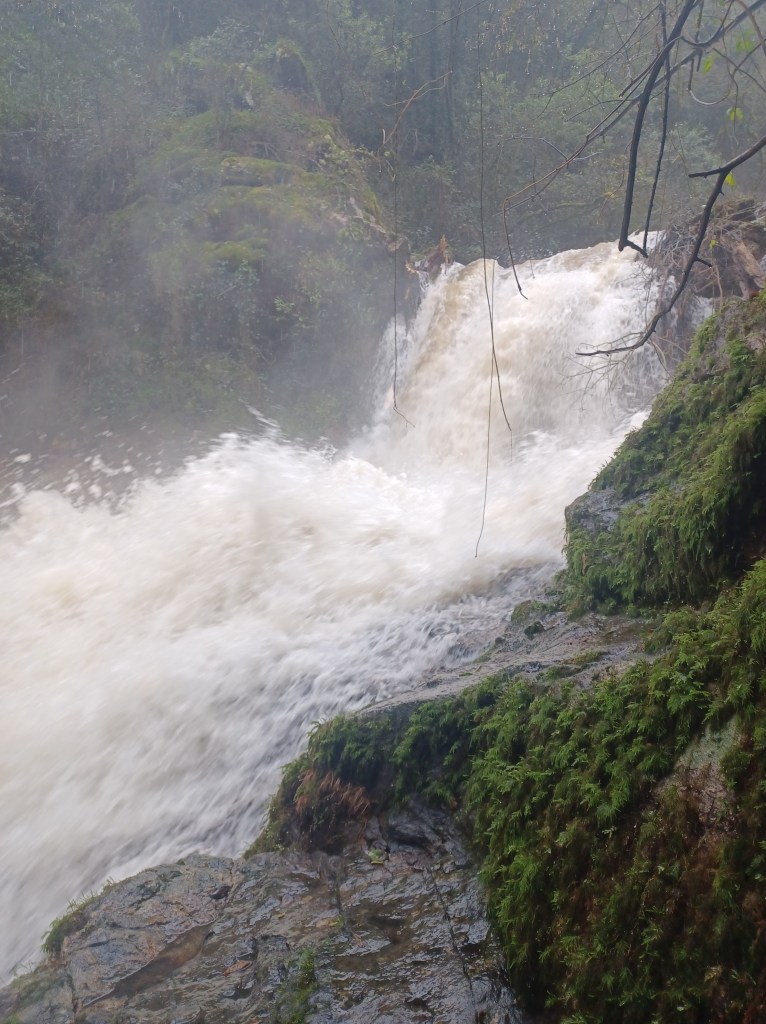
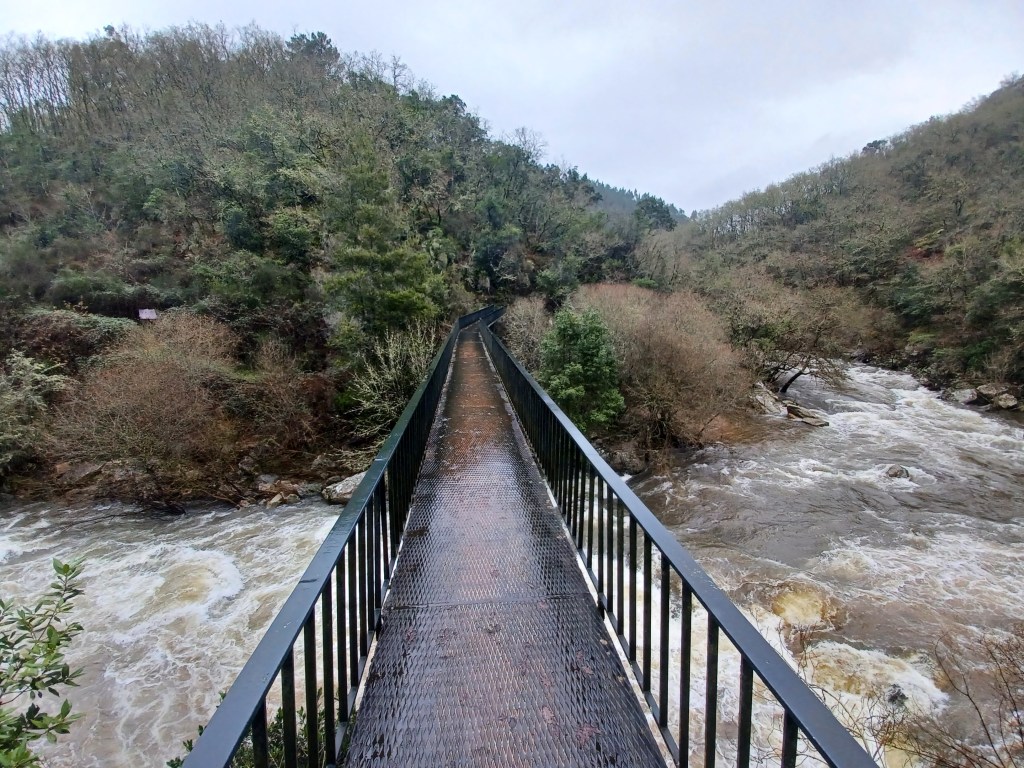
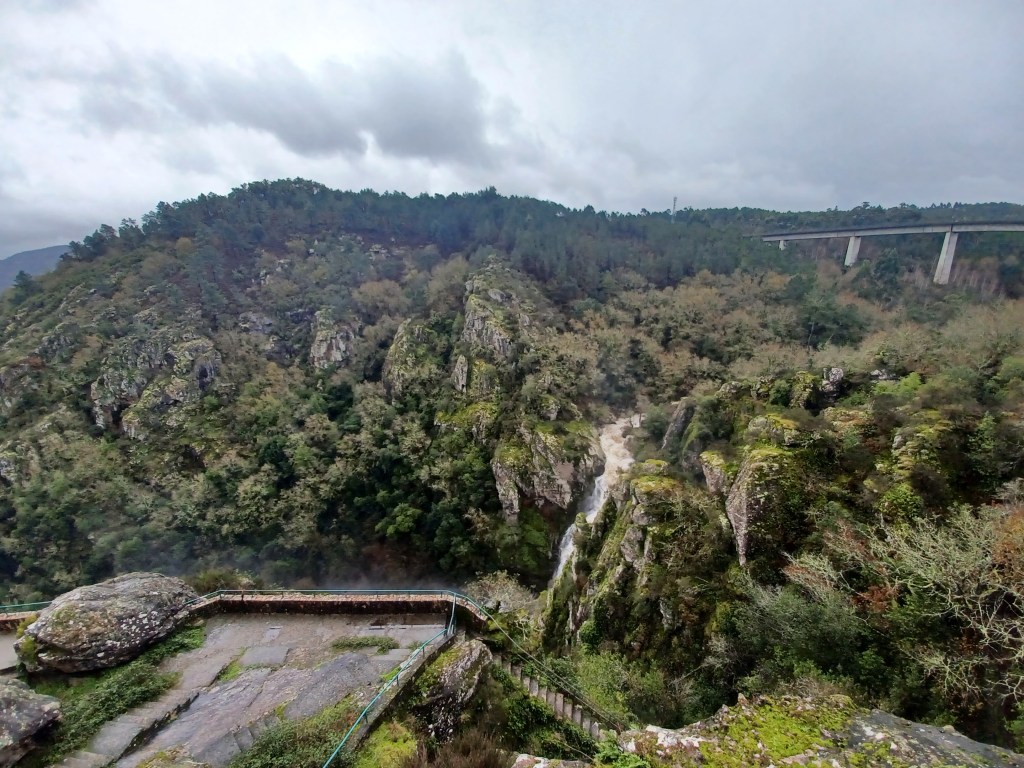
Fervenza de Toxa is only a short drive from Santiago de Compostela. It was not a long hike day, but a couple of short scenic trails. It looked like there was more to see if I wanted to follow the river further out, but I did not go too far this day.

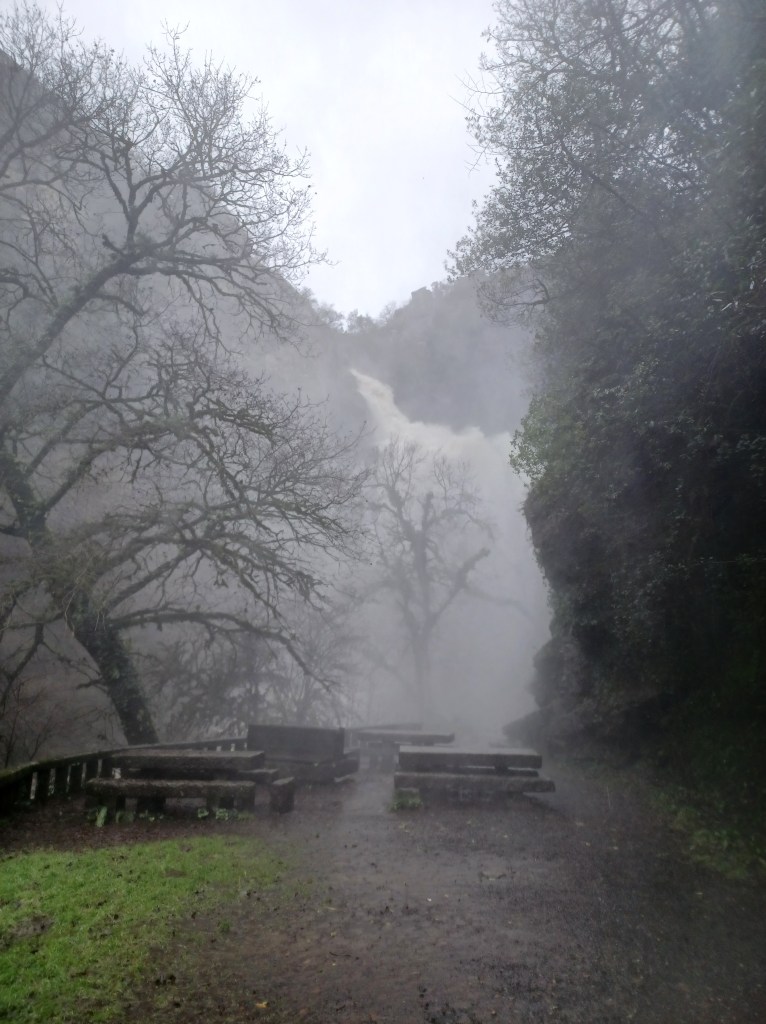
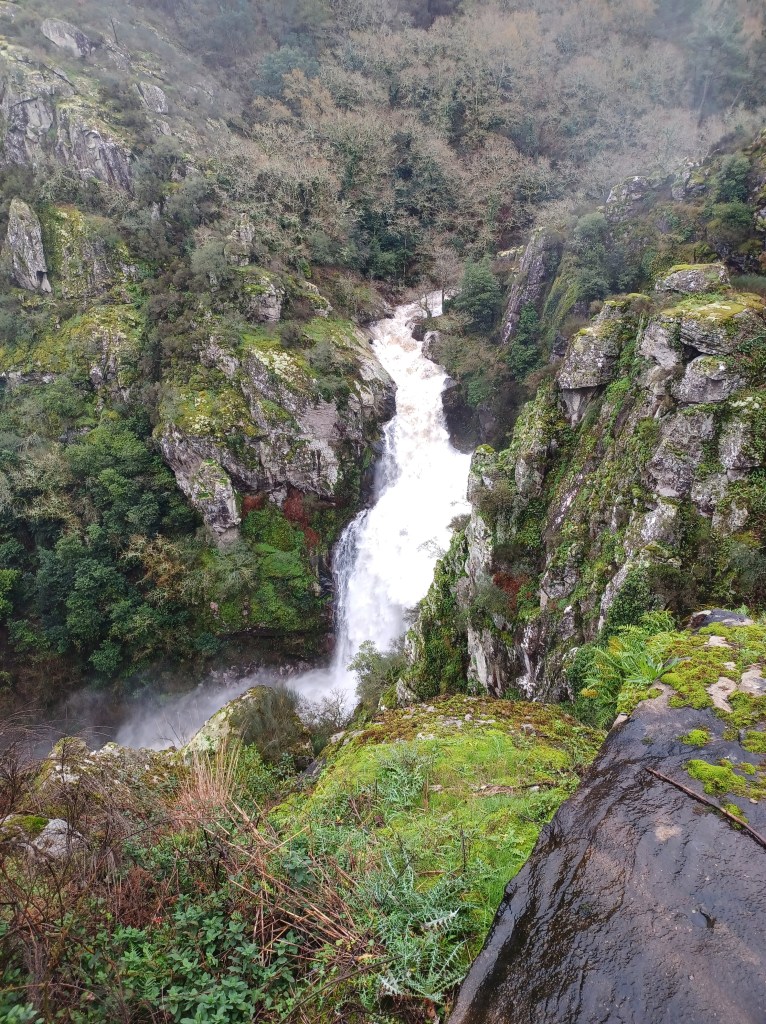
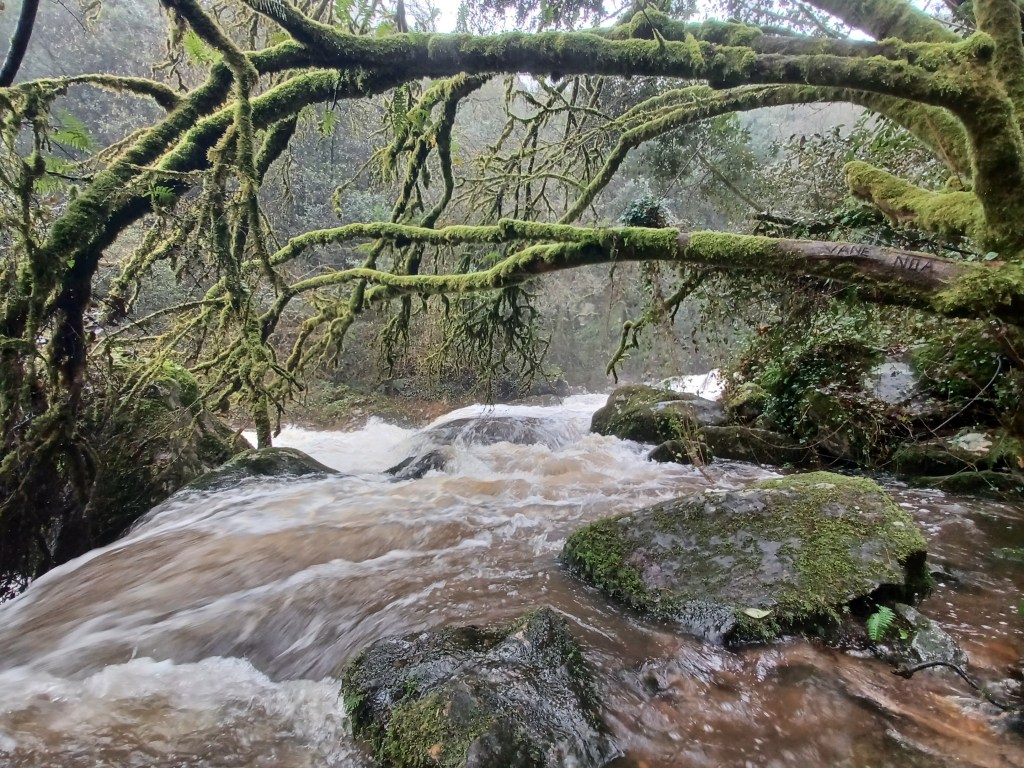
I started my adventure with the trail to the bottom of the falls. It had rained so much recently that the main falls were difficult to approach from the bottom. The rivers were full and the water was coming with such great force that it created a strong wind. The air was saturated with a mist that left visibility low. I could barely keep my eyes open in the wind and my phone was instantly soaked in my brief effort to take this photo. A great finale to the long summer drought that hit Spain the last year.

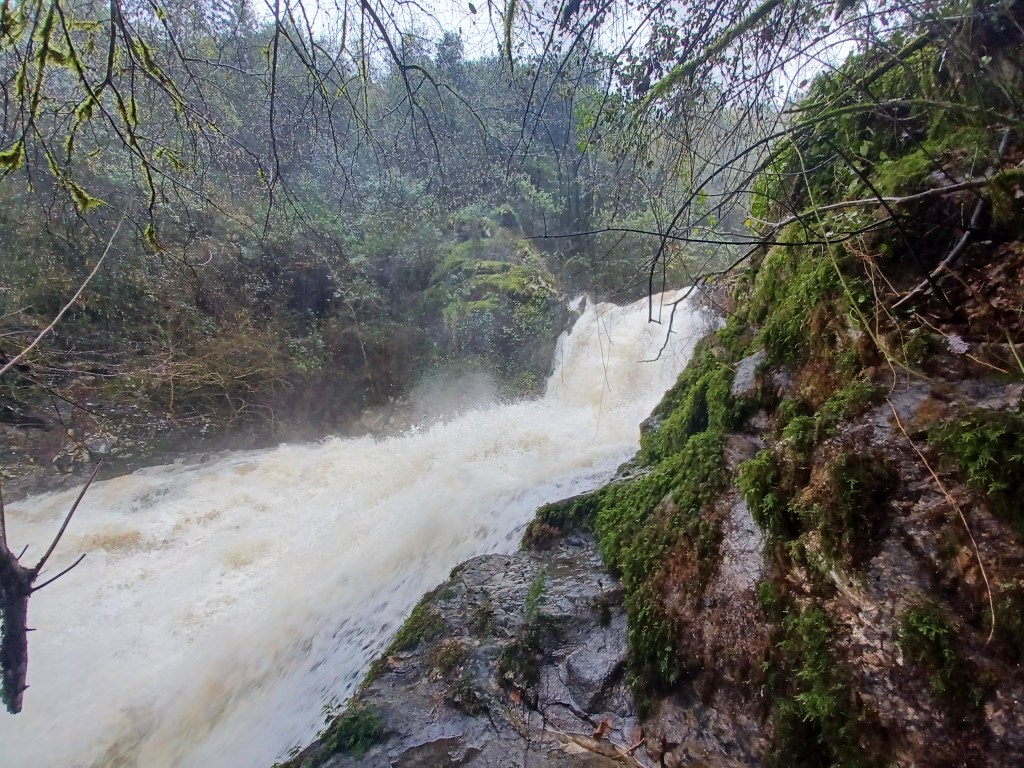
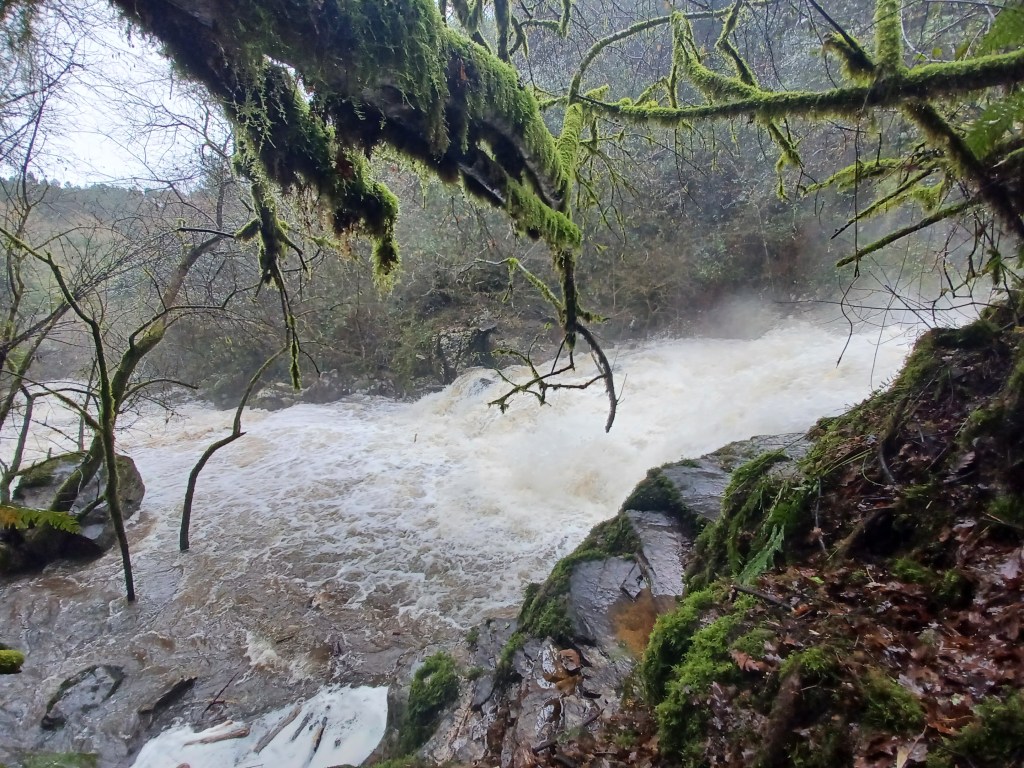
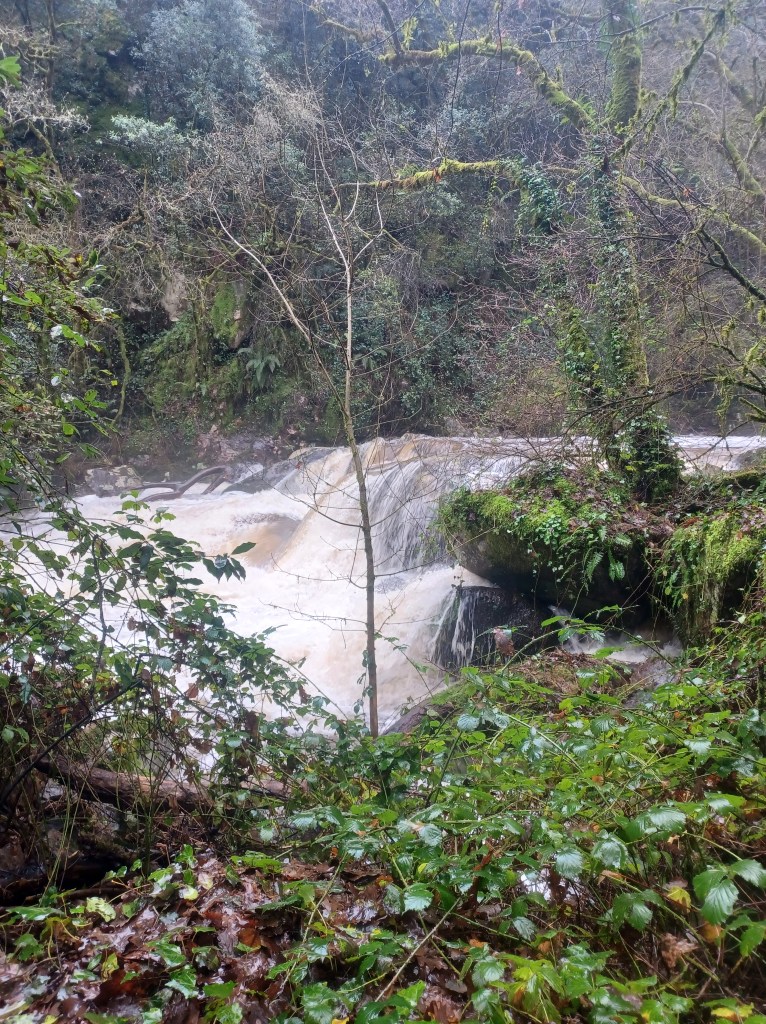
Following the path down the river, there was another smaller fall to see. I could get a lot closer here.

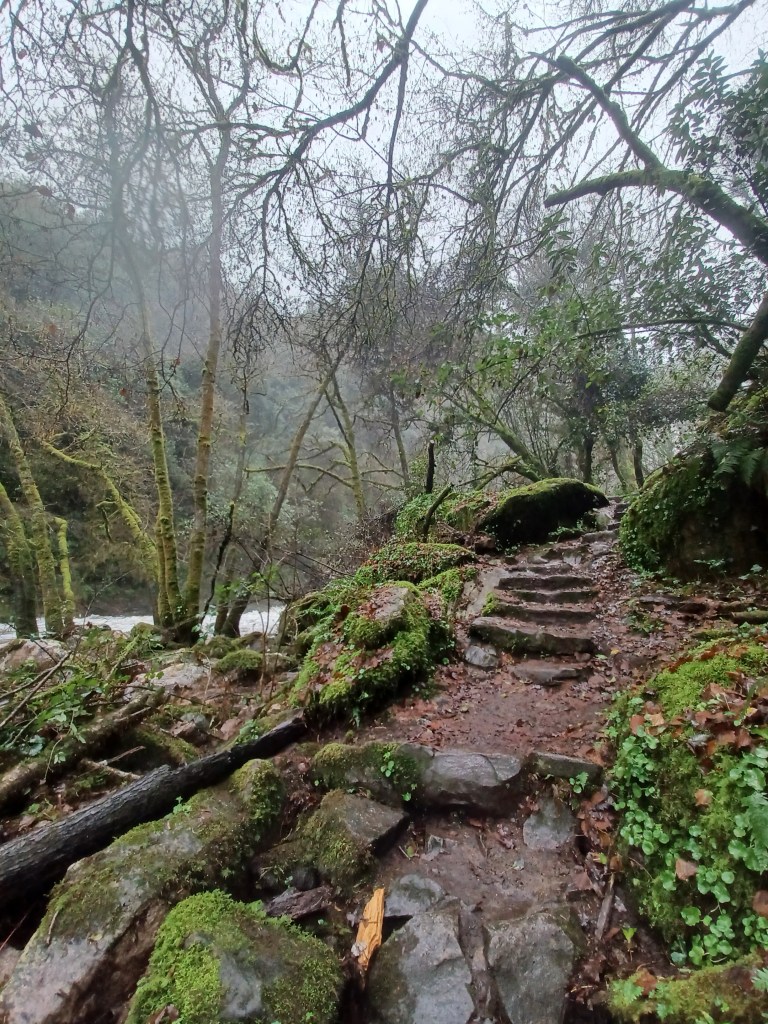
With the rains, the views along this path were pretty incredible. Everything felt so alive. It was fresh and green. Walking here feels a lot like stepping into the fairytales my grandmother used to read. I joke a lot about being careful to enter the abandoned houses because we don´t want to anger the brujas o hadas.

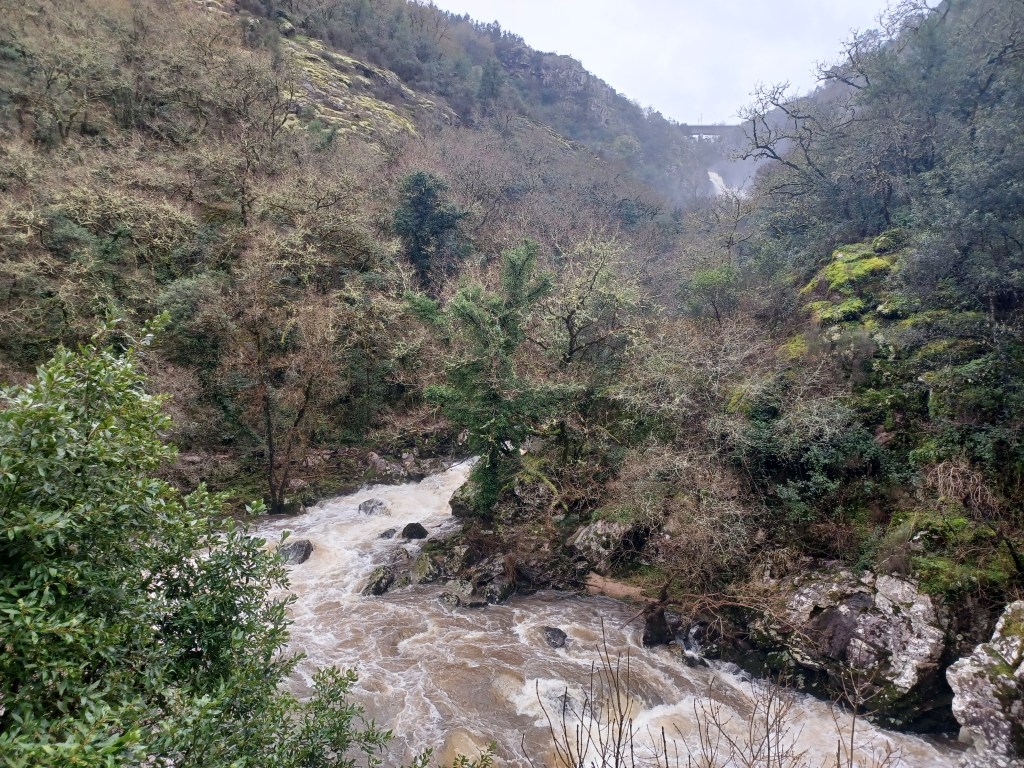
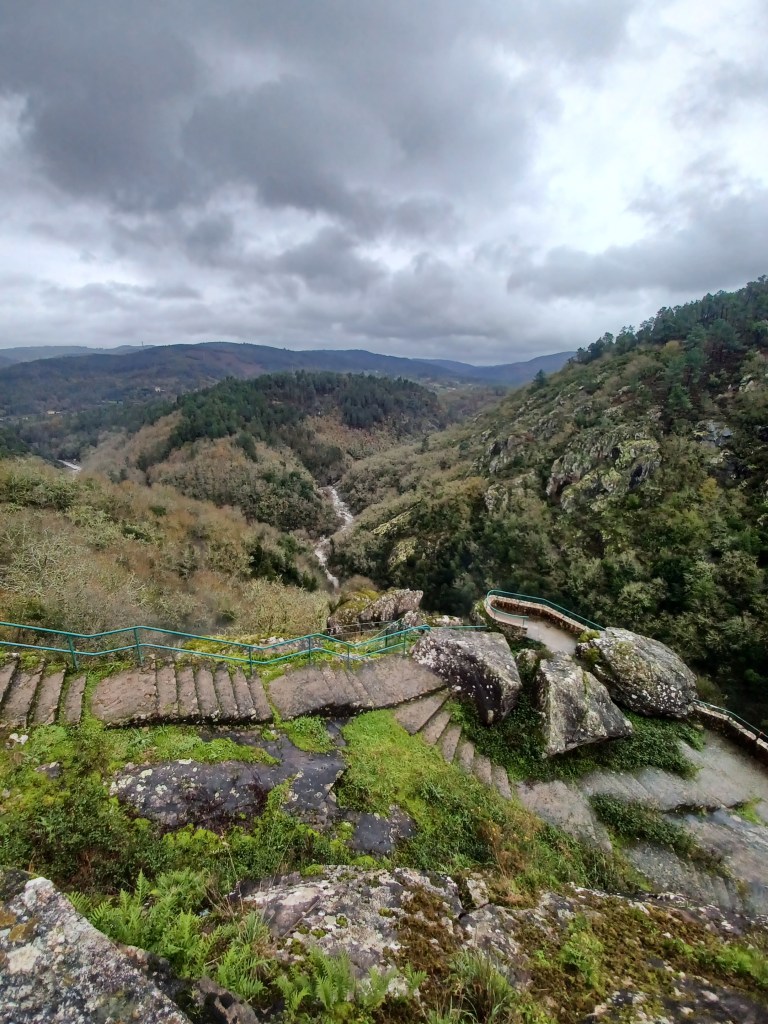
After this, I took the trail up the hill to see the views of the waterfalls from the top. I was amazed to find the views to be equally spectacular from this angle. I think the photos are better from the top, but my curiosity is better saatiated exploring the setas and fungi and helechos up close. If you visit, I think you really have to take both trails in this place.

This is the fervenza de Toxa from a distance. I hope to revisit this place in the summer when the water is lower so I can get the view from the bottom as well.